
Unblocking bottlenecks in recovery of endangered pinto abalone populations
Principal Investigator
- Jacqueline Padilla-Gamino, University of Washington, jpgamino@uw.edu
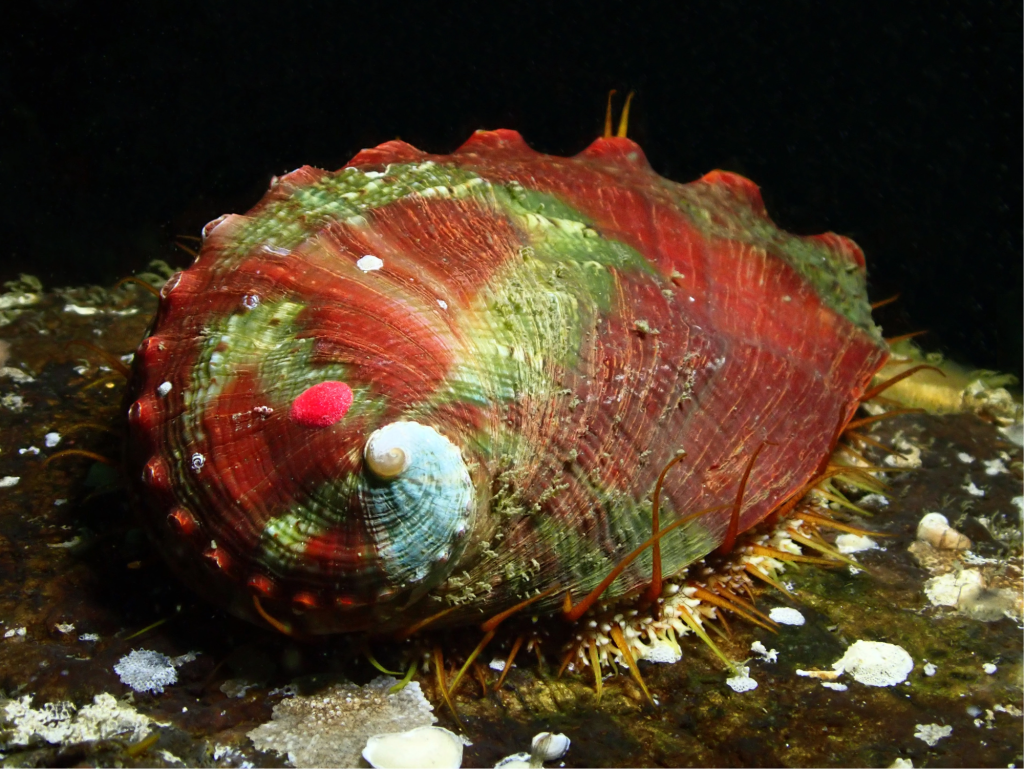
Pinto abalone is the only abalone species in Washington. From 1992-2017, they experienced a 97% decline in our waters. The decline is a loss for tribes who relied on abalone for cultural purposes, recreational divers, and for rocky reef ecosystems and kelp forests that benefited from abalone’s persistent grazing. In response to the decline, in 2019 WDFW listed pinto abalone as endangered in Washington. Conservation aquaculture is the core rebuilding strategy, whereby genetically diverse juveniles are produced for outplant in Washington’s San Juan Islands. Since 2009, the team, led by WDFW and PSRF, has produced and outplanted ~35,000 juveniles at 18 sites. However, bottlenecks in the hatchery and field pose acute challenges to scaled-up, accelerated recovery now and as waters become warmer and more acidified. The project addressed these needs by understanding factors contributing to losses in hatchery rearing of larvae and juveniles and variability in outplanted juvenile survival.
Project background
Native pinto abalone has declined by 97 percent in Washington. Restoring abalone has ecological, economic and cultural benefits. However, restoration efforts in Washington have been challenged by low levels of larval settlement and high levels of juvenile mortality in hatcheries. Understanding the factors that may contribute to abalone die-off events benefits ongoing restoration efforts by partners Puget Sound Restoration Fund (PSRF) and the Department of Fish and Wildlife.
Results and findings
Researchers investigated best practices for rearing and out-planting abalone. The team followed three lines of inquiry: assessing the impacts of the hatchery tank’s microbiome and testing the efficacy of probiotics on abalone survival; testing the impacts of pH, temperature and substrate on larval and juvenile abalone survival; and assessing oceanographic conditions at restoration sites with variable abalone survival. Results suggested new best practices to improve juvenile abalone survival in hatcheries that are now being implemented by PSRF.
Contact information
Jacqueline Padilla-Gamino
Professor
School of Aquatic and Fishery Sciences, University of Washington
206.543.7878
jpgamino@uw.edu