Physical processes in clam gardens
Principal Investigator
- Sam Kastner, Western Washington University, kastnes@wwu.edu
Co-Principal Investigator
- Marco Hatch, Western Washington University, hatchm5@wwu.edu
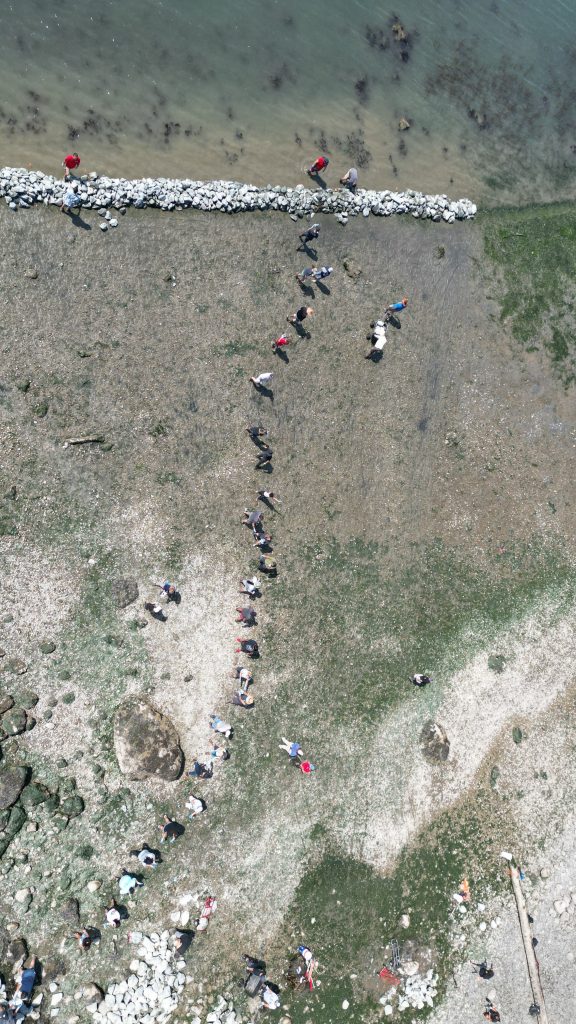
In collaboration with the Swinomish Indian Tribal Community (SITC), this project aims to investigate the influence of physical processes on the clam garden environment through a multi-faceted study at the newly constructed SITC clam garden on Kiket Island, Washington through the following scientific objectives: 1.) Determine which physical processes (e.g. winds, waves, diurnal heating, and tides) are most important in determining water properties (temperature, salinity, pH, dissolved oxygen, and chlorophyll-a) in clam gardens; 2.) assess how tidal variability and variability in other physical forcing change the relative importance of these processes in determining these water properties; 3.) quantify the garden wall’s impact on wave dynamics by determining the amount of wave energy dissipated at, reflected by, and transmitted past the wall. Accomplishing these objectives will provide a quantitative physical framework to help SITC with coastal management; understand how resilient the newly constructed clam garden is to variable physical forcing; and understand the physics of how clam gardens alter local habitats.
Project background
Clam gardens are mechanisms constructed by the indigenous people of the Pacific Northwest to improve shellfish access and productivity. These features, consisting of a low wall blocking off the intertidal zone from deeper water, have higher clam yields than the surrounding water, and are culturally important as traditional food sources. Recently, clam garden technologies are being reactivated in the PNW, often in partnership with external researchers. This reactivation is part of a larger Indigenous cultural reawakening as communities heal from past trauma and reassert their rights.
Results and findings
This project will be the first physical process study of the first clam garden built wholly in the modern era to assess the role of these processes in promoting clam growth. The mechanism by which clam gardens promote higher clam growth than surrounding regions is thought to be related to how the clam garden wall alters the circulation of water within the garden. This proposed mechanism may be impacted by a variety of physical processes, including tidal, wind, and wave forcing. Additionally, clam gardens may modify the incoming wave field, which may have important implications for sediment transport and clam garden management. This project will contribute a physical perspective to site selection of future clam gardens.
Work completed so far includes assisting SITC with starting a long term monitoring campaign in the clam garden and conducting a short term, intensive process study in June 2024. The team then set up a seasonal field campaign to follow up on this work while analyzing data and presenting results from the short term field intensive. Preliminary results include the first calculations of clam garden residence time, estimates of tidal flushing of extremely hot water from the clam garden, and transformation of long waves observed in the clam garden.
Contact information
Sam Kastner
Assistant Professor
College of the Environment, Western Washington University
360.650.2358
kastnes@wwu.edu