This boating season, help keep Washington’s waters clean with the Pumpout Nav app
The sun is out, birds are chirping, and Washington’s boating season is officially here! Before Washingtonians rush to the docks and hop in their boats, it’s important to brush up on how to dispose of sewage from a boat’s holding tank in order to keep our waters healthy. Luckily, for recreational boaters there are plenty of resources available to both get educated in waste disposal methods and locate mobile pumpout stations and adapter kits.
Washington State Parks’ Clean Vessel Act program (CVA) prioritizes vessel sewage disposal options as recreational boating becomes more popular. The CVA program supports, organizes, and funds the infrastructure of ports and marinas, where mobile pumpout boats are increasingly available. “The CVA program makes it easier for boaters to make the right decision,” says Lydia Moorehead, CVA program manager with Washington State Parks. The CVA also funds Pumpout Washington, a boater education program run by Washington Sea Grant. Pumpout Washington educates Washington boaters on stewardship practices that improve local water quality.
In addition to Pumpout Washington, Washington Department of Ecology’s “Pump Out, Don’t Dump Out” campaign educates boaters on how to use the Y-valve. The Y-valve diverts waste from restrooms to a holding tank on board. The training and implementation of the Y-valve ensures that boaters are complying with Puget Sound’s No Discharge Zone (NDZ) ruling. Educating boaters has been very effective so far: “Nearly 90 percent of boaters in Washington know that sewage discharge is environmentally impactful as well as illegal,” says Aaron Barnett, WSG boating program specialist.
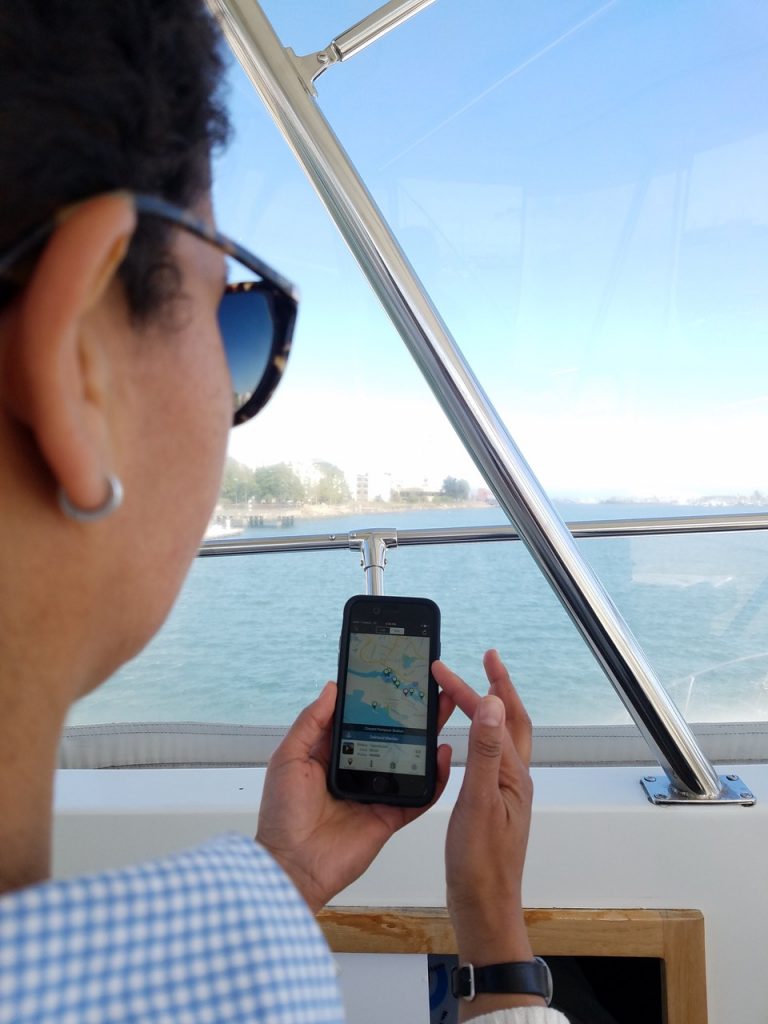
Nearly six years ago, WSG, in collaboration with Washington’s CVA program, announced that a free app for boaters, Pumpout Nav, had expanded to Washington state. Available for both iOS and Android, the app maps nearly 200 pumpout and dump stations throughout Washington to make them more easily located and accessible to the public. The tool shows the locations of sewage pumpout and dump stations as well as floating restrooms. In the last year Pumpout Nav has expanded to include a pumpout tracking feature, so boaters can see six pumpout stations in real time. Pumpout Nav also includes sewage disposal stations in California and Oregon.
Pumpout Washington offers an explanatory video for new boaters who are not familiar with pumpout stations and shares adapters with the public to further make sewage disposal accessible and prevent spillage. The program has also distributed thousands of free, easy-to-use adapters to boaters. Rather than requiring boaters to hold a nozzle in place, the pumpout adapters screw securely into the right side of a pumpout deck fitting, ensuring that no sewage spills overboard. Boaters can stop at the WSG offices in Port Townsend and Bellingham, or contact WSG directly to get their own mobile pumpout adapter mailed.
The efforts of Washington’s mobile pumpout and education programs have already prevented tens of thousands of gallons of sewage from entering Puget Sound annually, protecting aquaculture beds and improving water quality. However, sewage spills are not the only threat to the marine environment during boating season. Nearly 25 percent of small-scale oil spills come from smaller boating vessels. WSG and Washington Department of Ecology’s Small Spills Prevention Program is a terrific resource for boaters as they become knowledgeable in how to prevent and report oil spills. The program gives boaters free Small Oil Spills Prevention fuel bibs, absorbent pads that fit on the fuel nozzle of a boat to prevent fuel from dripping into the water.
Staying up to date on best boating practices helps protect the waters on which our ecosystems and communities depend. For more information on keeping sewage out of the Puget Sound, please contact Aaron Barnett, Washington Sea Grant Boating Program Specialist, at 206.616.8929 or aaronb5@uw.edu.
####
The CVA program is part of the Clean Vessel Act of 1992 supported by the U.S. Fish and Wildlife Service’s Sportfish Restoration Fund from special taxes on recreational boats, fishing gear and boat fuel. In Washington the program is managed by Washington State Parks. Washington Sea Grant provides small oil spills bibs and pillows as well as pumpout adapter kits to individual boaters, marinas, yacht clubs or other organizations that serve recreational boaters.
Washington Sea Grant, based at the University of Washington, helps people and marine life thrive through research, technical expertise and education supporting the responsible use and conservation of coastal ecosystems. Washington Sea Grant is one of 34 Sea Grant programs supported by the National Oceanic and Atmospheric Administration in coastal and Great Lakes states that encourage the wise stewardship of our marine resources through research, education, outreach and technology transfer.
Join the conversation: instagram.com/waseagrant and Facebook.com/WaSeaGrant.