
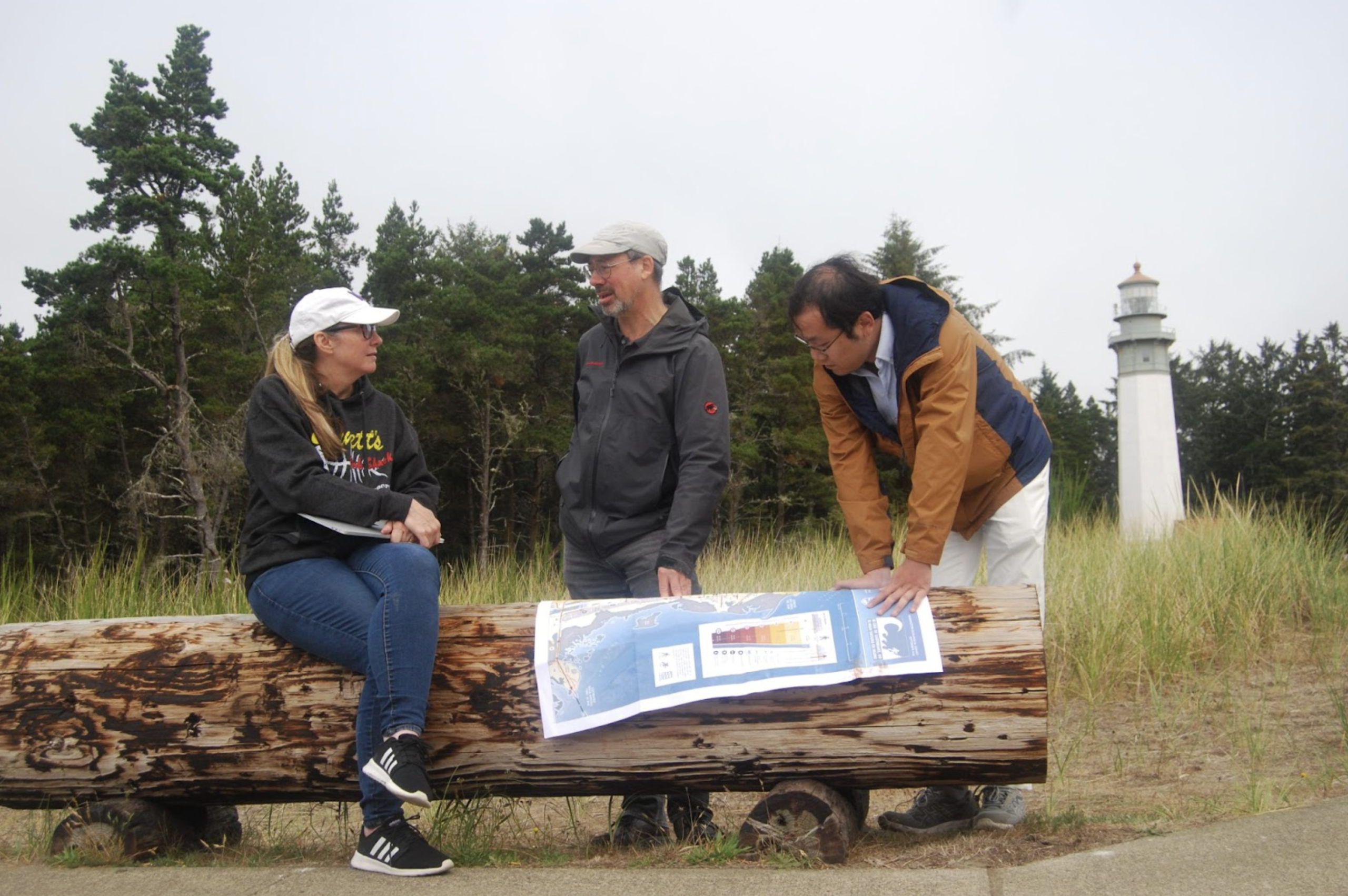
Washington is vulnerable to tsunamis from both local and distant earthquakes, and there is abundant geologic evidence for past tsunamis in Washington. Because of this, tsunami hazard awareness and planning is a number one priority for coastal community resilience. WSG’s coastal hazard experts collaborate with federal, state and county emergency managers and maritime groups, work on improving tsunami warning systems, and give public presentations focused on education and preparation.
Tsunami hazards in Washington
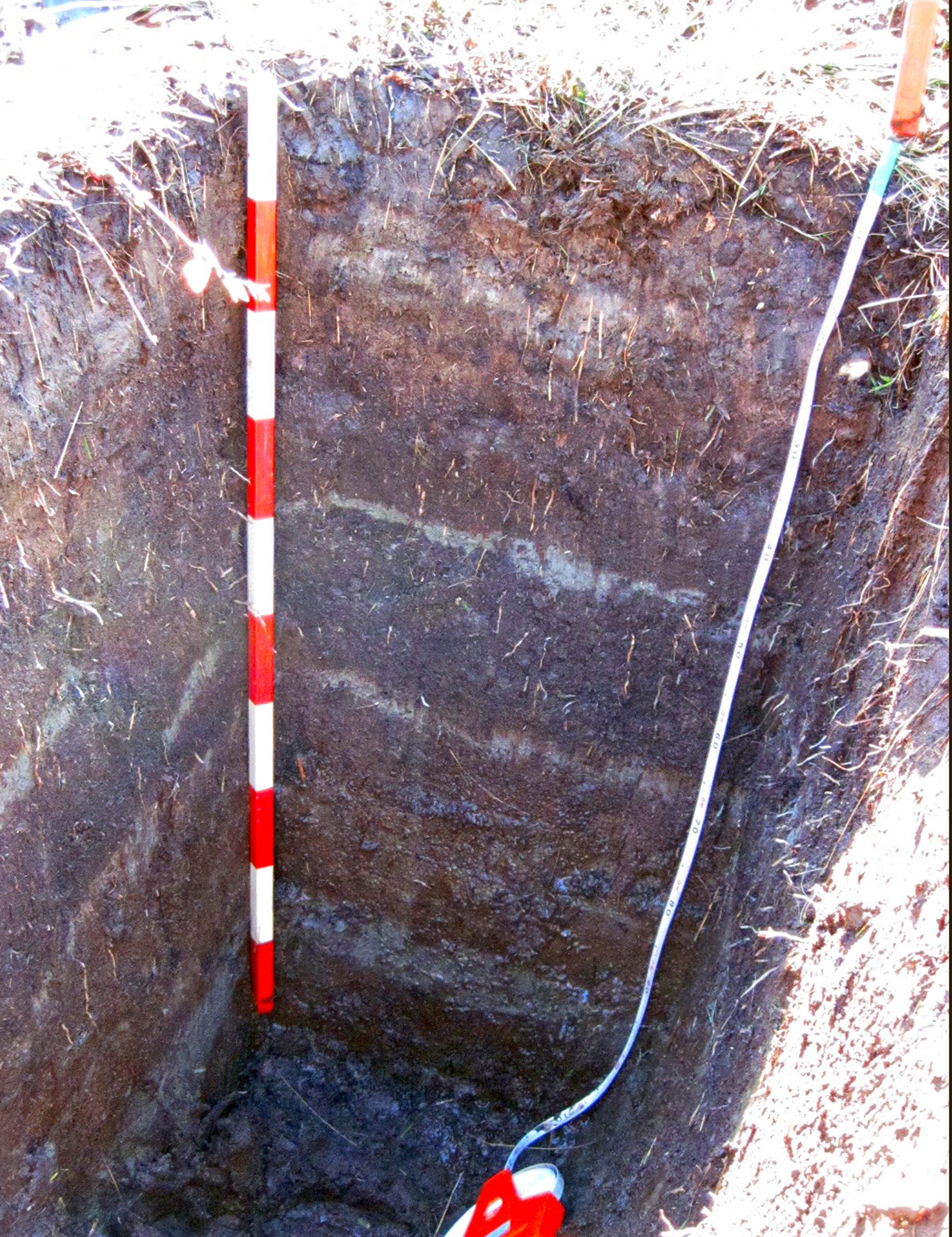
All marine shorelines in Washington state are vulnerable to tsunamis, and will experience tsunamis in the future. The Pacific Coast, the Strait of Juan de Fuca, and Puget Sound all have evidence for past tsunamis. Here is some information for Washington state residents and visitors, including how tsunamis form, the different sources of tsunamis that affect Washington coastlines and what you should do in the event of a tsunami.
What is a tsunami?
- A tsunami is a surge of water that typically forms when an earthquake causes sudden movement on the seafloor and displaces a mass of overlying water.
- Tsunamis can also be caused by landslides into or under water.
- Tsunamis are typically not like breaking beach waves, but behave more like a surge of fast-rising water, and move much farther inland than high tides or storm waves.
Washington tsunami sources and hazards
- Washington is vulnerable to tsunamis from both local and remote sources.
- Tsunamis generated offshore on the Cascadia subduction zone are the largest and most dangerous, and will arrive along Washington’s Pacific coastline in as little as 20 minutes after a major earthquake.
- Washington is also vulnerable to tsunamis that have traveled across the Pacific Ocean. In particular, tsunamis from Alaska are in a direct path across the Pacific to Washington. These far-field tsunamis from distant earthquakes take longer to arrive and are generally not as dangerous because they are not as large, and there is more warning time to evacuate. In 1964, a tsunami triggered by a magnitude 9.2 earthquake in Alaska reached northwest Washington within 3.5 hours, and caused flooding and damage in some locations.
- Faults that cross Puget Sound can also generate tsunamis farther inland, as happened when an earthquake on the Seattle fault generated a tsunami sometime between the spring of 923 and the winter of 924 CE.
- Tsunamis generated by local faults or landslides may affect only limited areas, but can be devastating at those locations.
More tsunami facts
- There may be several tsunami waves. The first wave to arrive is not always the largest.
- Tsunami waves can continue for 12 hours or longer.
- You cannot outrun a tsunami. Tsunamis travel 20-30 miles per hour (9-13 meters per second) when they inundate the coast. Most adults run at speeds between 10-15 miles per hour.
- Cascadia tsunamis may also be dangerous in parts of Puget Sound.
Prepare for a tsunami in Washington
How to be tsunami-ready
- Know the fastest evacuation routes to get to high ground quickly.
- Make an emergency plan for home and work.
- You might be on your own for a while, so think about how you will communicate with family, friends and neighbors – is there a network that you could use?
- Sign up for a tsunami monitoring system to receive alerts via phone, text or social media
- Learn to interpret messages from the U.S. Tsunami Warning System:
- Tsunami watch: issued for any earthquake magnitude 7.5 or larger if the epicenter is in an area capable of generating a tsunami; hazards not yet known; stay tuned for more information and be prepared to act.
- Tsunami advisory: issued when a tsunami that could affect the area is imminent, expected or occurring; hazards include strong currents and waves dangerous to those in or very near the water; stay out of the water, away from beaches and waterways.
- Tsunami warning: issued when a tsunami with the potential to generate widespread inundation is imminent, expected or occurring; hazards include dangerous coastal flooding and powerful currents; move to high ground or inland.
- Prepare a “go bag” that can cover your basic needs for 14 days – this will improve your odds of survival substantially. Here’s what to include:
- Warm clothes
- Sturdy shoes
- Bottled water and/or water filter
- Flashlight
- First aid kit
- Non-perishable food
- Medications
- Pet supplies
- A few items that will lift your spirits, like chocolate that can be shared
What should I do if a tsunami happens?
- The first warning of a large local tsunami will be the earthquake. Don’t wait for an official tsunami warning if you feel an earthquake. If you feel shaking, head to high ground immediately, and stay away from low-lying coastal areas for at least 12 hours, or until the official notification that the hazard has passed.
- Incoming tsunamis often cause water along the coast to recede before the wave arrives. If you see receding water, even if you did not feel an earthquake, head to high ground immediately.
- If you cannot get to high ground, move to the top of the most substantial structure you can find, preferably one with a strong concrete foundation. Some communities have, or will soon have, tsunami evacuation structures or assembly areas.
If there is no high ground or structure nearby, climb a large tree. After the Tohoku tsunami in 2011, many trees were left standing in areas where buildings had been washed away.
Tsunami resources
- NOAA Pacific Marine Environmental Laboratory: Center for Tsunami Research
- Washington Department of Natural Resources tsunami evacuation information
- Washington Emergency Management Division: Tsunami
- Ocosta School tsunami evacuation structure
- Washington Department of Natural Resources tsunami information