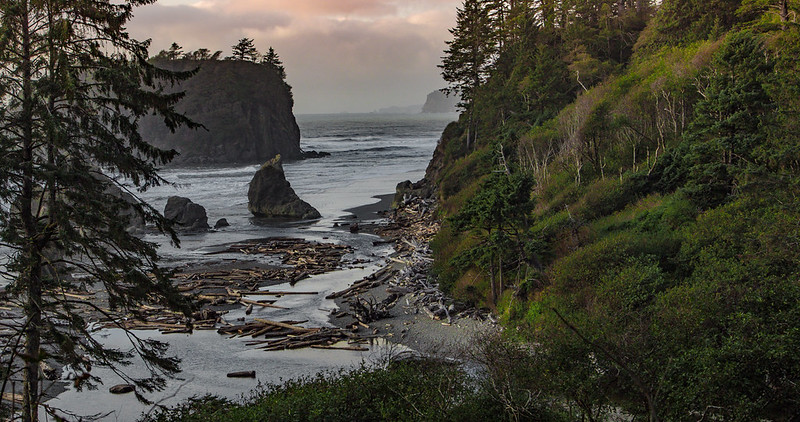
The marine species and Indigenous people of the Olympic Coast are uniquely vulnerable to the combined impacts of excess carbon dioxide (CO2) on their home waters. The same nutrient-rich currents and seasonal upwelling that make this ecosystem so productive, and have sustained thriving human cultures for millennia, also intensify ocean acidification and the related stressor hypoxia (low oxygen conditions). Coupled with rising sea surface temperatures and terrestrial heat waves and drought, these place-based communities truly are on the forefront of ocean and climate change. WSG is committed to collaborating with Olympic Coast Tribes and regional partners to understand and adapt to these changes. The following long-term collaborations exemplify this commitment.
Olympic Coast projects
Indigenous people have depended on Olympic Coast marine species for their livelihoods, food security and cultural practices for thousands of years, and they continue to exercise their treaty rights to fish, hunt and gather in their traditional waters. Today, these species—and the tribal communities who depend on them—are at risk from ocean acidification. Washington Sea Grant, in partnership with the Hoh, Quileute and Makah Tribes and the Quinault Indian Nation, federal and academic scientists and coastal managers, is working to understand and plan for the impacts of ocean change on tribal community well-being.