Small spills aren’t slick!
Small oil spills from commercial and recreational vessels often result from a lack of knowledge about proper techniques for vessel operation and maintenance. To address this problem, WSG works with state and regional partners to determine the most common causes of spills based on reported incidents.
WSG staff educate vessel owners and marina owners, helping them improve their operations and reduce spills due to targeted causes. At the same time, WSG promotes spill reporting through the “Spills Aren’t Slick” campaign with support from the Pacific Oil Spill Prevention Education Team (POSPET, a Canadian oil spill task force); WSG provides signs and educational brochures.
The small oil spills program is an important aspect of the larger Washington Clean Marina program. In an ongoing partnership with this program, WSG reviews and updates boating facility best management practices and inspects and certifies clean marinas. WSG incorporates oil spill prevention into classes and workshops for commercial fishermen and actively distributes spill cleanup kits at marinas, boat shows and boating venues.
Learn more about small oil spills
Along with summer boating season comes an increased risk of smaller oil spills from recreational boats, which account for 75 percent of the oil dumped into local waters. The Washington Sea Grant Small Spills Prevention Program provides boaters with the knowledge and tools they need to stop oil pollution at the source.
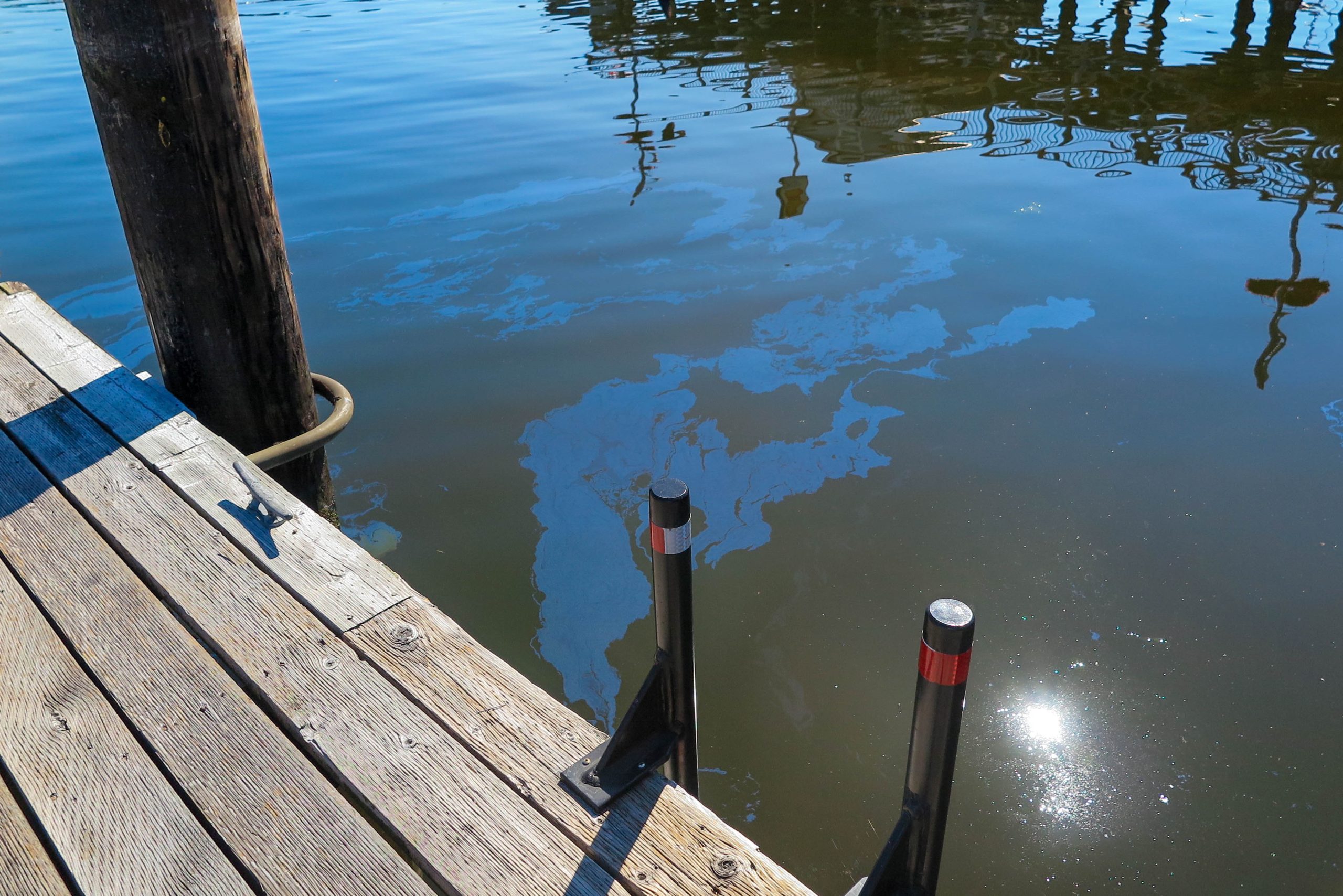
Every drop counts! Small spills introduce persistent, toxic oil into our waters. Even trace amounts of oil can damage marine life at fragile stages and threaten the vitality of aquatic ecosystems. Cumulatively, small spills can undermine jobs and recreation that depend on clean water. A single pint of oil spilled into the water can cover an entire acre of the water’s surface.
Further, certain compounds from oil – like polycyclic aromatic hydrocarbons (PAHs) — persist in the environment and can work their way through the food web. This means the toxins from oil spills are absorbed by smaller animals and accumulate in larger animals. Even the smallest amount of oil can cause nerve and respiratory damage in marine animals, including Washington’s endangered Southern Resident Killer Whales.
How to prevent small oil spills
- To prevent spills while fueling, wrap an absorbent pad around the nozzle end or plug inside the nozzle end.
- When fueling, use an absorbent pad or suction cup bottle under the vent(s) to capture fuel spurts from the vent.
- Do NOT top off fuel tanks. Keep bilge area as clean and dry as possible. Use absorbent pads that repel water but absorb oil.
- Dispose of oil-soaked absorbents as a household hazardous waste if possible. Otherwise, wrap the absorbents in newspaper, place in a plastic bag, and place into the garbage.
- Fit a tray and absorbent pads underneath the engine to collect drips and drops. This can greatly reduce cleaning time later.
Help keep our waters clean
Get free small oil spill prevention materials
Contact WSG boating specialist Aaron Barnett at 206.616.8929 or aaronb5@uw.edu.
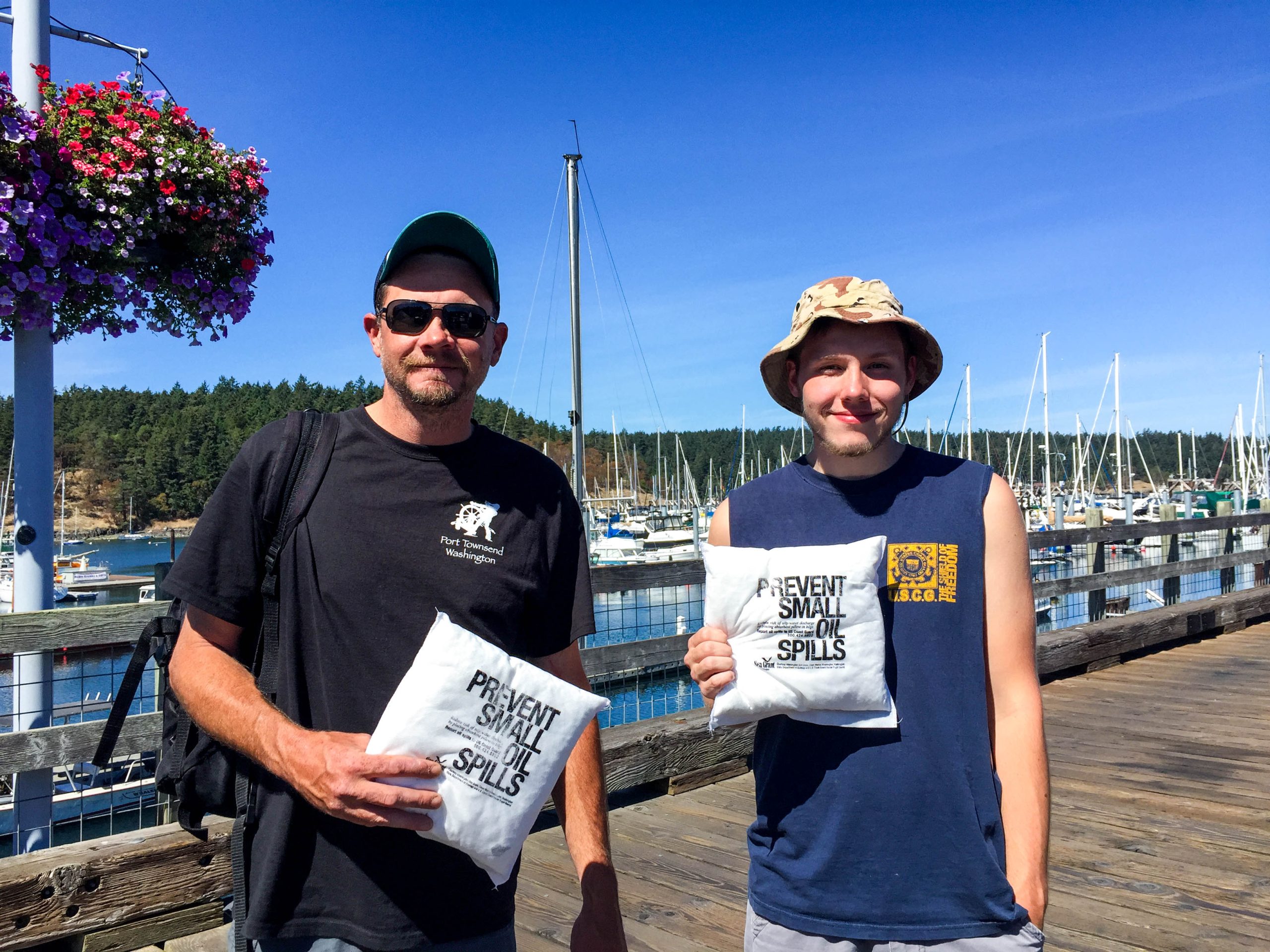
Get free small spills prevention materials including an absorbent fuel bib and a small absorbent pillow. The pillows are designed for placement alongside bilge pumps to prevent oily discharge from entering the water. They also keep your engine area cleaner!
Report all spills
In the event of a spill, immediately notify the U.S. Coast Guard (800.424.8802) and Washington Department of Ecology (800.258.5990). Stay on the scene, turn off ignition sources, and do not attempt to contain the spill with soaps or dispersants.
Learn more
WSG produced in partnership with Puget Soundkeeper and the Washington Department of Ecology a comprehensive handbook, Pollution Prevention for Washington State Marinas. This 72-page, full-color, interactive handbook provides a comprehensive guide for marina managers and staff, as well as boaters, to reduce water pollution from their facilities. View the handbook in our Publications Library.
Thank you for doing your part to keep our waters clean!
The Small Spills Prevention Program is managed by Washington Sea Grant with support from Washington Department of Ecology and distributed with help from Washington’s District 13 Coast Guard Auxiliary.