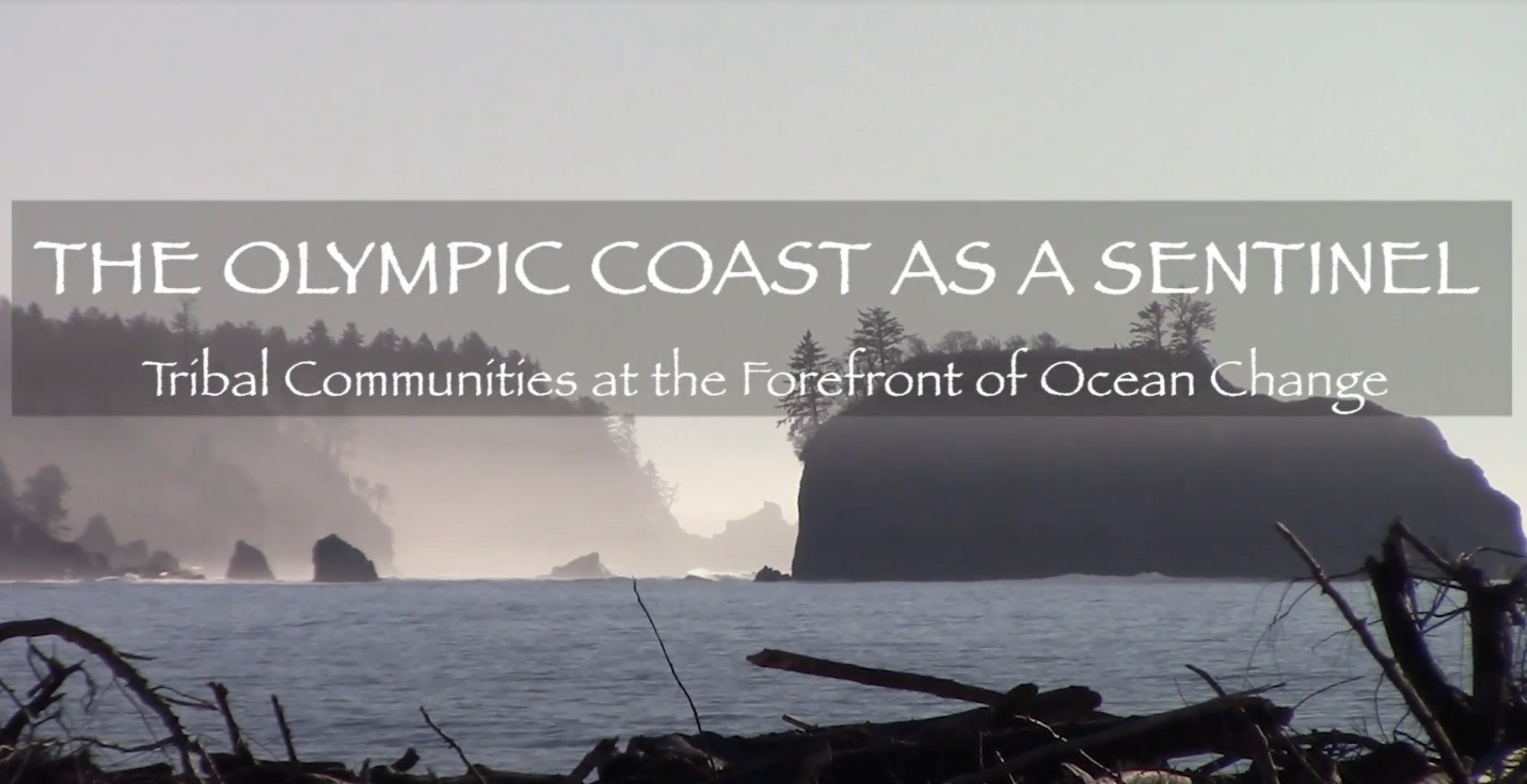
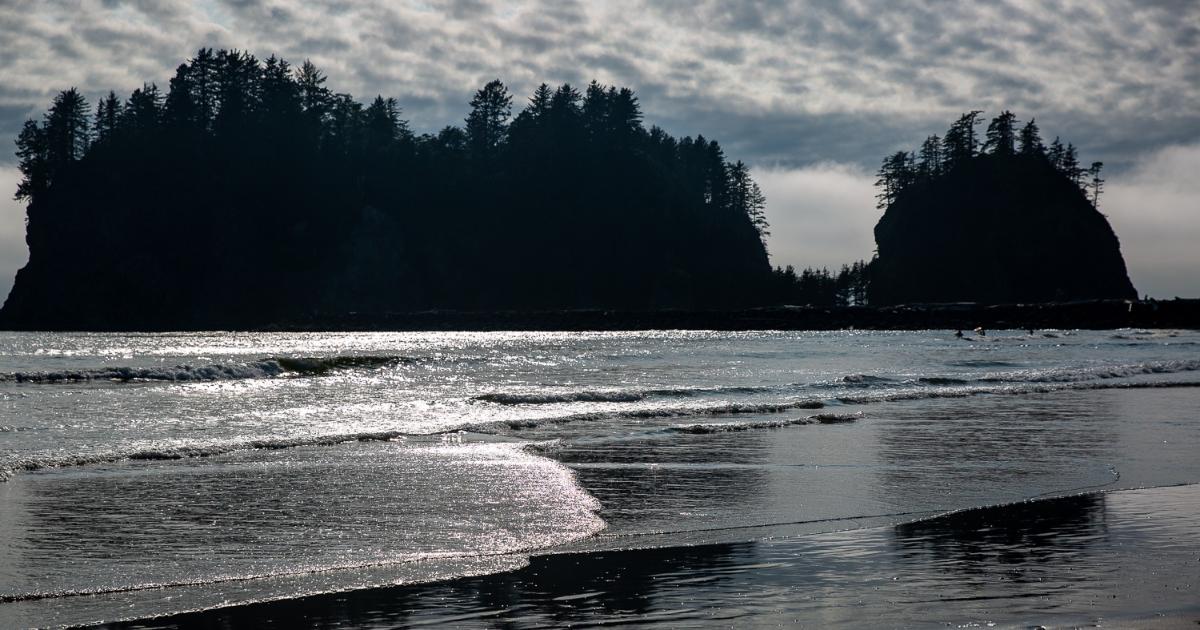
The marine species and Indigenous people of the Olympic Coast are uniquely vulnerable to the combined impacts of excess carbon dioxide (CO2) on their home waters. The same nutrient-rich currents and seasonal upwelling that make this ecosystem so productive, and have sustained thriving human cultures for millennia, also intensify ocean acidification and the related stressor hypoxia (low oxygen conditions). Coupled with rising sea surface temperatures and terrestrial heat waves and drought, these place-based communities truly are on the forefront of ocean and climate change. WSG is committed to collaborating with Olympic Coast Tribes and regional partners to understand and adapt to these changes. The following long-term collaborations exemplify this commitment.
Olympic Coast projects
Indigenous people have depended on Olympic Coast marine species for their livelihoods, food security and cultural practices for thousands of years, and they continue to exercise their treaty rights to fish, hunt and gather in their traditional waters. Today, these species—and the tribal communities who depend on them—are at risk from ocean acidification. Washington Sea Grant, in partnership with the Hoh, Quileute and Makah Tribes and the Quinault Indian Nation, federal and academic scientists and coastal managers, is working to understand and plan for the impacts of ocean change on tribal community well-being.
Vulnerability and Resilience Assessment: Phase 2 (2025-2027)
Funded by the NOAA Ocean Acidification Program and led by Dr. Jan Newton, UW Applied Physics Laboratory
This project leverages the 2017 regional vulnerability and resilience assessment that advanced place-based biological risk via forecast model projections. This new work focuses on co-designing new data and forecast products, synthesizing the information with each Tribe, and working to ensure the information is accessible and useful. This furthers efforts to deliver desired shorter time-scale projections focused on practical information relevant to key species such as Dungeness crab, razor clams, olive snails and Pacific halibut. The research team will organize follow-up meetings to finalize work products, produce new guidance tools and products, and disseminate work with tribal managers and their communities.
Vulnerability and Resilience Assessment: Phase 1 (2017-2021)
Funded by the NOAA Ocean Acidification Program and led by Dr. Jan Newton, UW Applied Physics Laboratory, and Dr. Melissa Poe, Washington Sea Grant.
This participatory community-based research project undertook a comprehensive, place-based approach to assess Olympic Coast Tribes’ vulnerability and resilience to ocean acidification. Collaborators conducted original social science research, synthesized existing chemical and biological data, and produced model projections to assess current and projected vulnerabilities from acidification, in order to enhance Tribes’ ability to prepare for and respond through respective community-driven strategies. The project was developed in partnership with tribal co-investigators and regional resource managers from start to finish and was rooted in a focus on local priorities for social, cultural, and ecological health and adaptive capacity.
Project-related products:
- NOAA Ocean Acidification Program project page
- NOAA project handout
- The Olympic Coast as a Sentinel: This beautiful 18-minute film about the research partnership uses collaborators’ own voices and perspectives on ocean change and tribal resilience to bring the story to life.
Ocean Acidification Sentinel Site (OASeS)
OASeS was established in 2019 by the NOAA Office of National Marine Sanctuaries to enhance coordination, collaboration, and communication around changing ocean conditions along the Olympic Coast. It seeks to inform resource managers and coastal communities by telling the story of ocean acidification and related impacts like hypoxia on Washington coastal marine resources, coastal cultures, communities, and economies.
OASeS is steered by a roundtable committee of 20 local, state, tribal, and federal entities, including WSG, and is coordinated by the Olympic Coast National Marine Sanctuary. Free public symposia are held on the coast every other year to facilitate information sharing amongst scientists, resource managers, Olympic Coast Treaty Tribes, educators, students and the public.
OASeS outreach products: