
The WSG Advisory Committee provides general program oversight, direction, and advice. The Committee was first established in August 2006 with tribal, state, and federal partners. The Committee was restructured in 2022 to better reflect the diverse people, sectors and geographies that Washington Sea Grant serves.
 Laural Ballew, Ses yehomia/tsi kuts bat soot
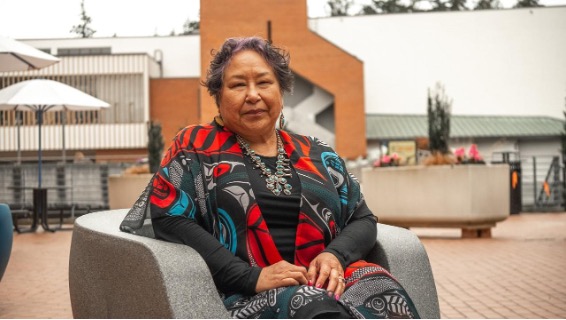
American Indian/Alaska Native and First Nations Relations Executive Director and Tribal Liaison, Western Washington University
A member of the Swinomish tribe, Laural lives on the Lummi reservation with her husband, Timothy Ballew Sr. She received a bachelor’s degree from Western Washington University (WWU), earned a master’s degree in public administration-tribal governance from The Evergreen State College, and is studying for a doctorate in Indigenous development and advancement from Te Whare Wānanga o Awanuiārangi, in New Zealand. She is the executive director for American Indian/Alaska Native and First Nation Relations/Tribal Liaison for WWU.
 Azure Boure

Suquamish Traditional Foods & Medicines Program Coordinator, Suquamish Tribal Council
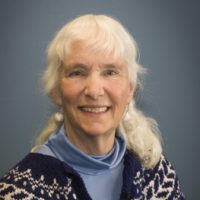 Megan N. Dethier

Director of Friday Harbor Labs, University of Washington
Dr. Megan N. Dethier is a research professor in the biology department at the University of Washington, but works full-time at Friday Harbor Laboratories on San Juan Island, where she is the director. She received her undergraduate degree from Carleton College in Minnesota and her doctoral degree at the University of Washington. Since 1978, she has worked on shoreline ecology of the Pacific Northwest. Her first love is rocky shores, having spent childhood summers on the coast of Maine, but she now also works in mud, gravel and salt marsh habitats. She designed a marine habitat classification system for Washington state, and has worked with the National Park Service and various Washington agencies designing shoreline mapping and monitoring programs. Her current research efforts are mostly focused in Puget Sound, investigating the linkage between physical features of shoreline habitats and their biota, and the effects of human impacts (such as shoreline armoring) on this linkage. She greatly enjoys teaching marine biology to undergraduate students, which she has done at the Friday Harbor Labs for over 30 years, but also at marine labs elsewhere including Maine and Australia.
 Rob Duff

Natural Resource Consultant
Rob received a Bachelor of Science degree in Zoology from the University of Massachusetts in 1986 and a Master of Science degree in toxicology from the University of Washington in 1993. For several years, Rob worked for state agencies to limit the impact of pollution on human health and the environment. From 2014 to 2019, Rob advised Governor Jay Inslee on policy issues including water resources, water quality, salmon recovery, Hanford Site cleanup and oil spill preparedness. In 2021, Rob became the Sustainable Business Development Director at the Washington Department of Commerce, where he was involved in stimulating markets for recycled materials and connecting businesses to reduce and utilize waste streams. He returned to the Governor’s Office in June of 2023 as the Governor’s Policy Director through the end of Governor’s term in January 2025. He currently owns his own consulting business focusing on public policy as it relates to natural resource issues in Washington state.
 Deb Granger

Interim Managing Director, Whatcom Working Waterfront Foundation
In addition to working as a high school career counselor connecting students to post-secondary education/training opportunities, Deb served as Program Manager for the 12-state USDA-funded Western Regional Aquaculture Consortium at the University of Washington. She also helped launch the Working Waterfront Coalition of Whatcom County and the associated Foundation, Bellingham SeaFeast, Bellingham Dockside Market, and served on the Bellingham Technical College Foundation Board. She enjoys developing and implementing successful workforce training programs — NW Maritime Apprenticeship, a WA State-registered apprenticeship, and Buoyant Beginnings Pre-Apprenticeship for Maritime Careers, a partnership with Lummi Nation. She continues to commercial fish for salmon (reefnet fishing) with her husband, Pete, in the Salish Sea.
 Terrie Klinger

Professor Emeritus, University of Washington School of Marine and Environmental Affairs
Terrie Klinger is a marine ecologist and professor emeritus in the School of Marine and Environmental Affairs at the University of Washington. Her work has spanned nearshore systems along the US West Coast, including Puget Sound, Washington’s Pacific coast, and Alaska. She holds a PhD degree from Scripps Institution of Oceanography and an MSc degree from the University of British Columbia.
 Phil Levin

Director, University of Washington School of Marine and Environmental Affairs
Phil Levin is the director of UW’s School of Marine and Environmental Affairs and former interim executive director of EarthLab. He previously served as a professor of practice at UW and lead scientist for The Nature Conservancy of Washington. Levin is a conservation scientist who is interested in bridging the gaps between theory and practice and between social and natural sciences. The main focus of his work is developing interdisciplinary tools to inform conservation of marine and terrestrial ecosystems and the communities that depend on them.
 Michelle McClure

Former Director, NOAA Pacific Marine Environmental Laboratory
Michelle McClure was the director of the National Oceanic and Atmospheric Administration’s Pacific Marine Environmental Laboratory from 2019 until October
2026. The lab conducts oceanographic research focused on the ocean’s impacts on and interactions with climate and seasonal patterns such as El Nino, as well as ocean acidification, fisheries-oceanography and tsunamis. In this role, she is also co-leading NOAA’s national Climate-Ecosystem-Fisheries Initiative, which is designed to provide regionally-specific, high-resolution ocean projections for fisheries and other marine management. Prior to joining PMEL, Michelle served as the director of the Fishery Resource Analysis and Monitoring Division at NOAA’s Northwest Fisheries Science Center, leading the scientific support for the management of west coast groundfishes. She also led NMFS’s national effort to develop guidelines for incorporating climatechange science into Endangered Species Act decision-making and served as the chair of the Technical Recovery Team for salmon and steelhead in the Interior Columbia Basin. Michelle received her PhD from Cornell University in ecology and evolutionary biology, with a focus on fish development and evolution, and a BA/BS from The Evergreen State College. Michelle enjoys working at the interface of science, policy and management and is still figuring out what her next step is.
 Jeremy Rusin
Acting Science Director, Northwest Fisheries Science Center, NOAA Fisheries
Jeremy Rusin has served as the Acting Science Director for the Northwest Fisheries Science Center (NWFSC) since May 2025. In this role, he leads a diverse staff that provide the science necessary to conserve marine and anadromous species and their habitats off the West Coast and in freshwater rivers of Washington, Oregon, and Idaho. Jeremy’s experience at NOAA spans over 25 years. After first serving as an observer on commercial fishing vessels, he was hired to lead domestic and international fisheries management and implementation of the Tuna Conventions Act. For the next 12 years Jeremy oversaw several research programs at the Southwest Fisheries Science Center in La Jolla, CA. In these roles, he provided technical expertise in support of U.S. interests in the Inter-American Tropical Tuna Commission and in trade dispute settlement hearings in the World Trade Organization. He also built cohesive teams providing science operations support for a variety of Center research programs. Prior to joining NWFSC, Jeremy served as the Deputy Science Director for six years at the Alaska Fisheries Science Center. Jeremy earned a B.S. in Biology from Davidson College and a Master’s in Marine Affairs from the University of Washington.
 Peter Steelquist

Washington Policy Manager, Surfrider Foundation
Peter is a lifelong Washingtonian, surfer, and environmentalist. He is the Washington and Alaska Policy Manager for the Surfrider Foundation. He resides on the beautiful Olympic Peninsula, and he’s passionate about building resilient coastal communities. Pete has a degree in Geography and Environmental Policy from Evergreen State College (Go Geoducks!) and spent eight years working in the Washington Legislature. When not working or surfing, he can be found riding bicycles, snowboarding, or camping in wild places with his family.
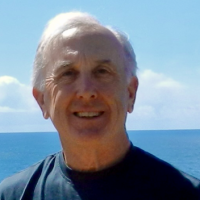 John Stein

NOAA Northwest Fisheries Science Center (retired); Chair, Skagit Watershed Council Board of Directors
John Stein currently is the Chair of the Skagit Watershed Council Board of Directors, and a member of the Washington State Academy of Sciences. John was recently elected to the Board of the Academy. Previously, he was Science and Research Director of NOAA Fisheries’ Northwest Fisheries Science Center in Seattle, WA; the Center’s scientific responsibilities are for living marine resources (e.g., salmon, groundfish, and killer whales) and their habitats. John also was Chair of the Puget Sound Partnership’s Science Panel and previously an affiliate faculty member in the University of Washington’s School of Aquatic and Fisheries Sciences and Department of Environmental and Occupational Health Sciences. Dr. Stein was active in PICES (North Pacific Marine Science Organization) a multinational organization of Pacific Rim countries; ultimately serving as Vice-Chair of Governing Council. With NOAA, John was the federal co-lead for the West Coast Regional Planning Body for Marine Planning under the National Ocean Policy and led NOAA’s Seafood Safety Program in response to the Deepwater Horizon oil spill.
 Bobbak Talebi

Southwest Region Director at the Washington State Department of Ecology
Bobbak is a public service leader with more than two decades of experience in land use and environmental planning, natural resource management, and conservation. As Washington State Department of Ecology’s Southwest & Olympic Region Director, he represents the Director and agency, maintaining positive relationships with Tribal, federal, state and local governments, industry representatives, and environmental organizations. The Region Director coordinates significant, high-profile service delivery priorities, and maintains collaboration across regions and environmental programs. Ecology’s Southwest & Olympic Region provides service to twelve counties and fourteen tribal nations. He is also responsible for managing regional facilities, including the Vancouver Field Office.
 Laura Wilder

Aquaculture Coordinator & Legislative Liaison, Washington State Department of Agriculture
Laura Wilder joined Washington State Department of Agriculture (WSDA) in 2016 as a policy advisor to the director and in 2018 was appointed to special assistant. In this capacity, she developed a strong working relationship with Washington’s shellfish farmers and strengthened WSDA’s support of Washington’s aquaculture sector. Laura currently acts as WSDA’s legislative liaison, working closely with the Governor’s Office, Policy Makers, and the agricultural community. Before working for WSDA, Laura was the legislative director for the Washington State Grange. Her background includes working in government affairs with a private lobbying firm. Laura holds a bachelor of science degree from The Evergreen State College in Olympia. In her free time, Laura enjoys exploring the outdoors with her husband and three young children.
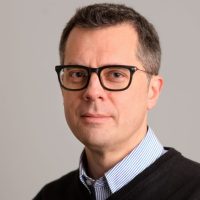 Joel Thornton (ex officio member)
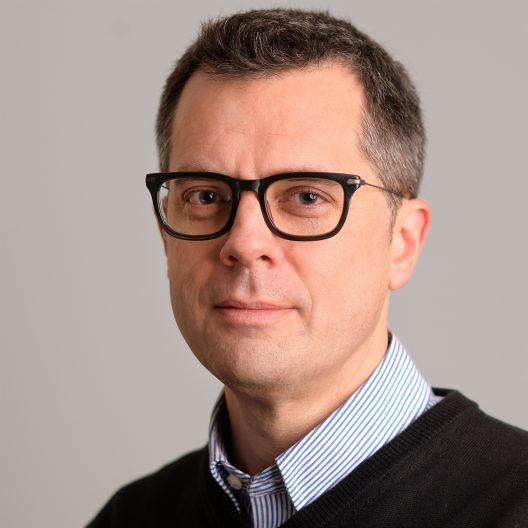
Maggie Walker Dean, College of the Environment, University of Washington
Joel Thornton is the Maggie Walker Dean of the College of the Environment at the University of Washington. He earned a bachelor’s degree in Chemistry from Dartmouth College in 1996 and a PhD in Chemistry from the University of California, Berkeley in 2002. Following a postdoctoral fellowship at the University of Toronto, he joined the Department of Atmospheric and Climate Science in 2004 and served as department chair from 2022 to 2025. Dr. Thornton’s research broadly concerns how the chemistry and composition of the atmosphere affect climate and air quality.