
Geoducks – A Compendium
Point of Contact
Kate Litle, kalitle@uw.edu
Description
Geoducks in the genus Panopea are the largest hiatellid clams and are unique in many ways—with a fused siphon and mantle, incompletely enclosing valves, and proportionally small adductor muscles. Geoducks occupy deep burrows in soft sediments and can be very long-lived. These and many other attributes continue to fascinate scientists around the world.
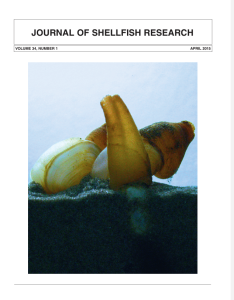
As a high-value product, fishery and aquaculture activities are increasing to keep up with demand, and geoduck-related industries are generating substantial export revenues in a number of countries worldwide. Scientific studies are necessary for sustainable fisheries and viable aquaculture, and to conserve the ecological value of these fascinating clams. In recent years, the number of publications on geoduck biology, ecology, and fisheries has increased dramatically. This special issue adds considerably to the body of literature on geoducks. Several of the new papers address basic biological topics such as reproduction, phylogenetics, disease, longevity, and larval life history characteristics, whereas others address population dynamics and growth models, population genetics, and the ecological impacts of geoduck aquaculture.
Taken together, the articles in this issue represent the most current information on Panopea spp. available to the scientific community and resource managers, and illustrate the breadth of approaches that, in the best cases, will result in synergies that propel the science forward. We believe the geoduck research community will benefit from the work presented here, not just as a valuable source of information, but also as a conduit for future collaborations to shed more light on the enigmatic and fascinating geoduck.