Diving into “The Mysterious World of Bull Kelp”
From the Summer 2026 Sea Star
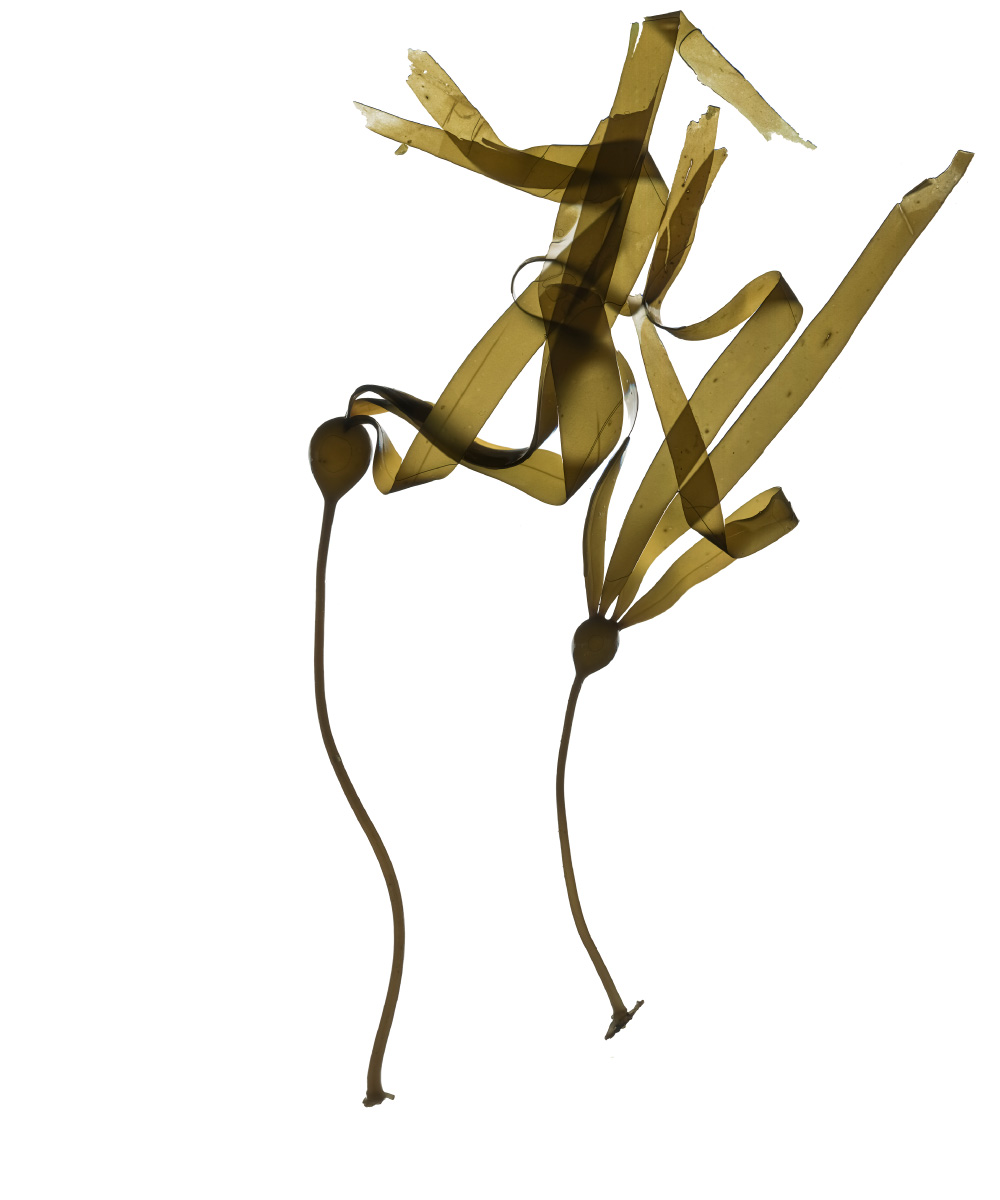
A cluster of elongate olive-brown tubes floats on the surface waters off the North Pacific Coast. Each has a head-like bulb at one end topped with a flourish of thin sinewy blades, almost resembling hair. Perhaps a sea otter has entangled itself among the algae. Or perhaps it would have in the past — before their numbers so drastically dwindled.
This is the bull kelp seascape seen from the surface. It is beautiful and compelling on its own — and yet, this scene offers only a hint of the richness and literal depth of the entire ecosystem. As bull kelp forests become increasingly imperiled, it is increasingly important that we are able to see down through the entire water column. Otherwise, we won’t be able to grasp what’s at stake if we lose them. 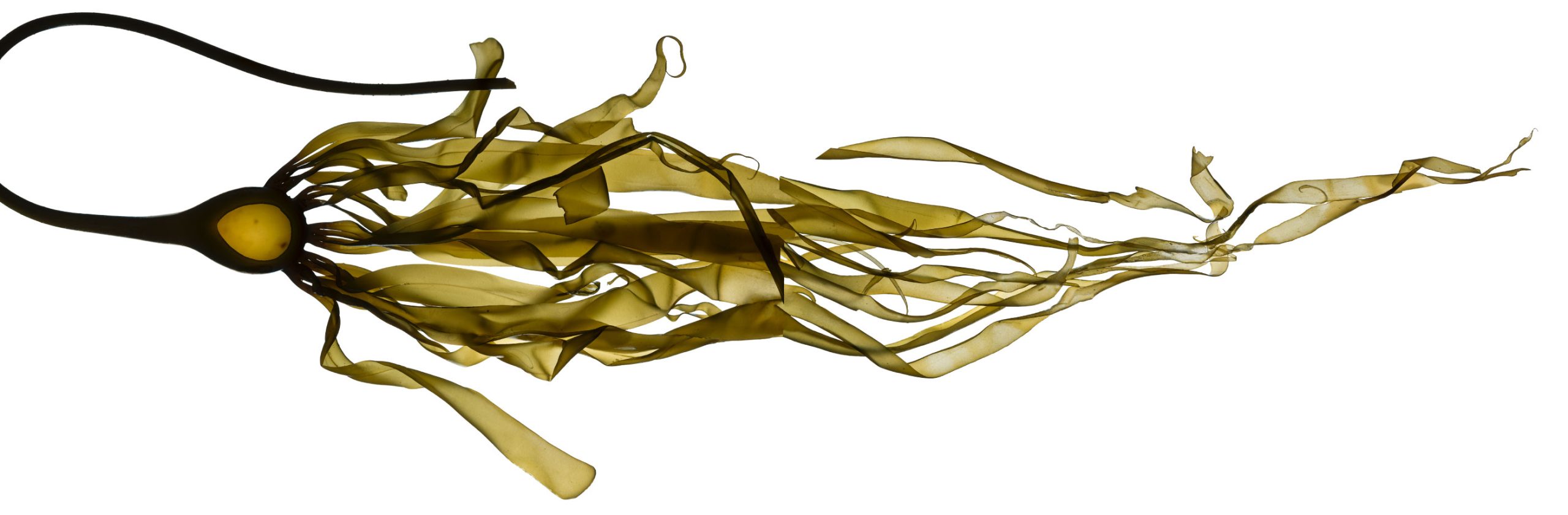
With The Mysterious World of Bull Kelp, Josie Iselin and Marianna Leuschel created a way for anyone with an internet connection to take a deep dive into these interconnected underwater worlds, which exist along the Pacific Coast from Central California to the Aleutian Islands. The multifaceted webstory is the centerpiece of the Above/Below ocean literacy campaign, which received funding from Washington, Oregon and California Sea Grants.
The webstory uses captivating art, historic maps, and photography, including interactive illustrations from artist Ellen Litwiller of the important characters found within bull kelp ecosystems. The overall work presents a wealth of science-based information in sections organized by species, region, and other topics. The content from the webstory is now also available as a print book, which was released by Heyday Books in March 2026.
“We wanted to bring this world of bull kelp to people who otherwise wouldn’t be able to experience what’s below the surface of the water,” Leuschel says. And, as major declines have occurred in bull kelp forests up and down the Pacific coast — including a staggering 95% loss since 2014 on California’s North Coast — getting to know these ecosystems has never been more important.
Iselin and Leuschel’s partnership blossomed out of a shared passion for telling the story of a “spectacular organism in dire straits.” Iselin, a photographer by training, brought years of experience creating seaweed-focused art, writing about seaweed, and collaborating with seaweed researchers. Leuschel, a communications strategist and designer, brought her two decades of experience and connections from running a creative studio.
Over the course of writing two seaweed books, An Ocean Garden: The Secret Life of Seaweed and The Curious World of Seaweed, Iselin developed ongoing relationships with many seaweed experts. She and Leuschel have become familiar with the many factors threatening West Coast marine environments, from sea star wasting disease to warming waters. “There was quite a bit of desperation in the research community,” she says. “At the same time, talking to these scientists, I saw there were so many interesting stories about bull kelp natural history, a lot of point-in-time journalism, but nowhere to find the overriding holistic ecological story. Everyone was focused on their own research.”
Iselin and Leuschel recognized the potential to use art and storytelling to build bridges between the information silos. The creative team worked with more than two dozen advisors and collaborators on the project, including scientists who offered regional expertise. In Washington, this included Tom Mumford of the University of Washington Friday Harbor Labs, and Jodie Toft of Puget Sound Restoration Fund (PSRF).
 Toft’s work on bull kelp includes leading a recent Washington Sea Grant-funded project that investigated the population structure of Salish Sea bull kelp forests. The scientists found there were genetic differences between kelp in different areas; information that could help determine how to preserve the genetic integrity of wild bull kelp when outplanting it as part of aquaculture or restoration efforts. This research could help guide initiatives included in the Puget Sound Kelp Conservation and Recovery Plan, which outlines a path toward a revitalized bull kelp population in Puget Sound.
“Our forests below the water’s surface are powerhouses, just as those above the water. Spanning the full height of the water column, bull kelp forests are disproportionately important in the marine ecosystem, as food factories, for the refuge they provide from sound and predators, and more,” Toft says. “PSRF and the broader kelp recovery community are feverishly working to develop and deploy in-water bull kelp reforestation projects where forests have thinned or vanished. The successes we’ve had thus far are wildly inspirational. The road ahead involves maintaining momentum, integrating new information, and finding ways for more kelp enthusiasts to have a hand in restoration.”
Iselin and Leuschel hope that building a broader understanding of restoration work and why it is necessary will help to build more support for that work. In addition to The Mysterious World of Bull Kelp webstory, the pair have taken on initiatives such as Kelp Reverberations, an exhibit that was on display at the San Juan Islands Museum of Art in late 2025 (which Washington Sea Grant also supported). They also organized the North Coast KelpFest in Mendocino and Fort Bragg, California, an event that celebrates kelp through art, science, food, and film. The next KelpFest! will take place October 9–12, 2026.
“It’s such a beautiful world, and if we can just get people into the story, they’ll be curious to learn more,” Leuschel says. “And the more people learn about bull kelp, the more inclined they’ll be to help protect it.”
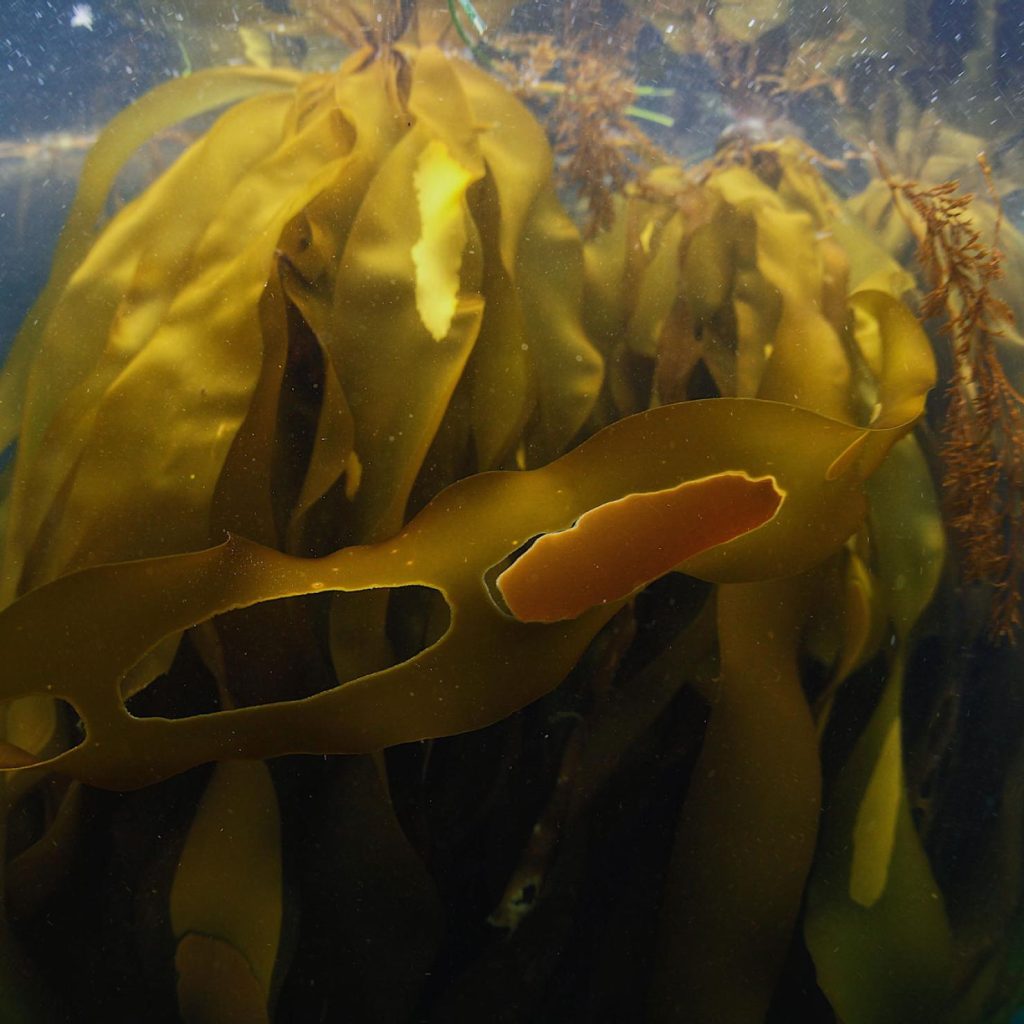
Images and artwork from The Mysterious World of Bull Kelp
