
SoundToxins celebrates 20 years protecting human health and shellfish safety
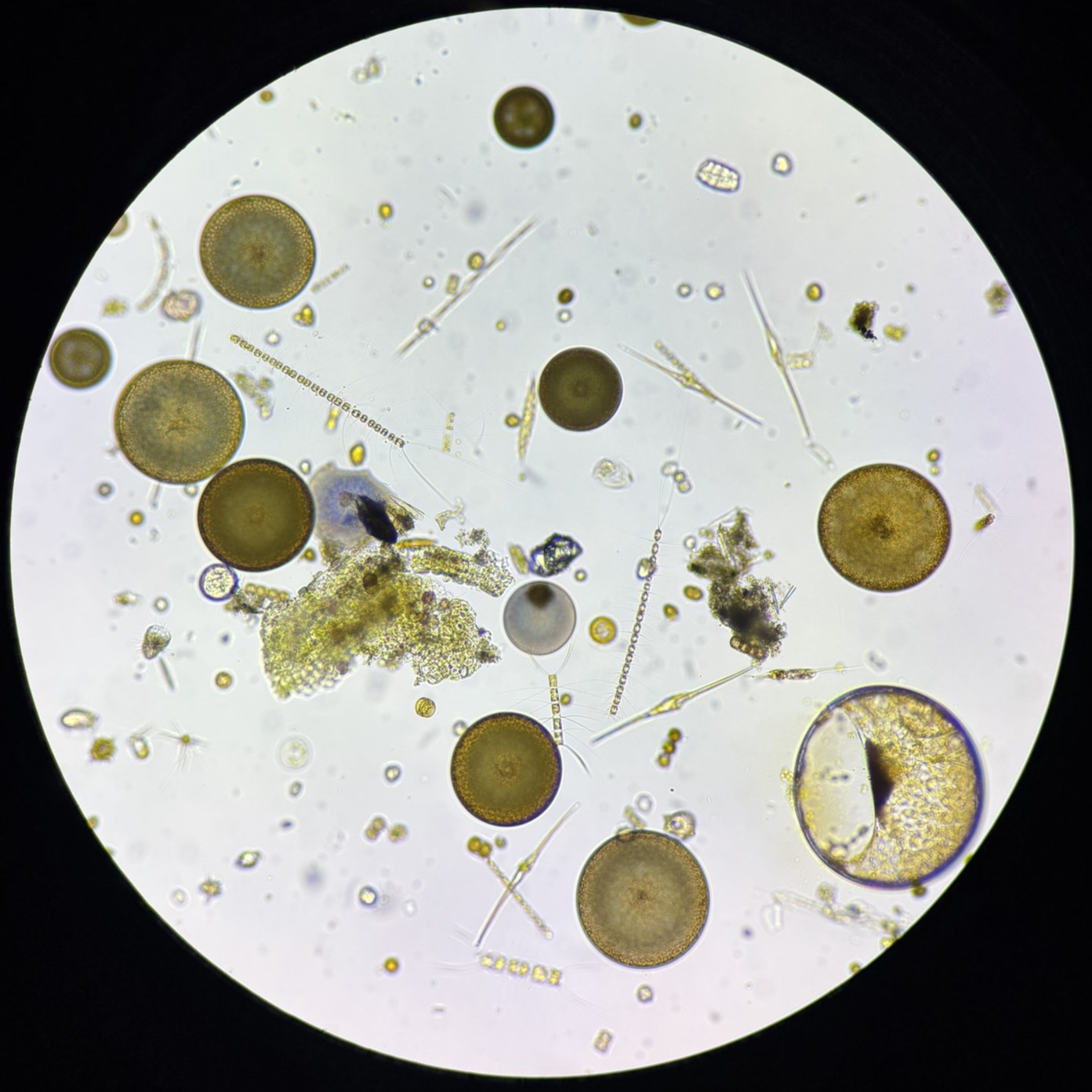
This year we celebrate the 20th anniversary of SoundToxins, a Washington Sea Grant program that serves as an early warning system to protect people and shellfish safety from toxic phytoplankton blooms. As a former phytoplankton sampler for SoundToxins and its Pacific coast sister program Olympic Region Harmful Algal Bloom (ORHAB), I am so happy to dig deeper into this program’s history and shine a light on the important work that protects Washingtonians from marine toxins.
Shellfish form a crucial part of Washington state’s economy and culture. As filter feeders, shellfish benefit from the wide variety of microscopic phytoplankton that transform Puget Sound and connected waterways into the “Emerald Sea.” While a vital food source for the oysters, clams, and other harvested species of Washington waters, phytoplankton can also produce toxins that can be dangerous to humans and other marine life.
SoundToxins has been the result of countless years of hard work, passion for the environment, and commitment to the health and safety of Washingtonians. “SoundToxins relies on the dedication of partners and volunteers across the state to provide near-real time data, which is used by health officials to make rapid management decisions,” says Michelle Lepori-Bui, WSG marine water quality specialist and SoundToxins manager.
Phytoplankton and toxic blooms
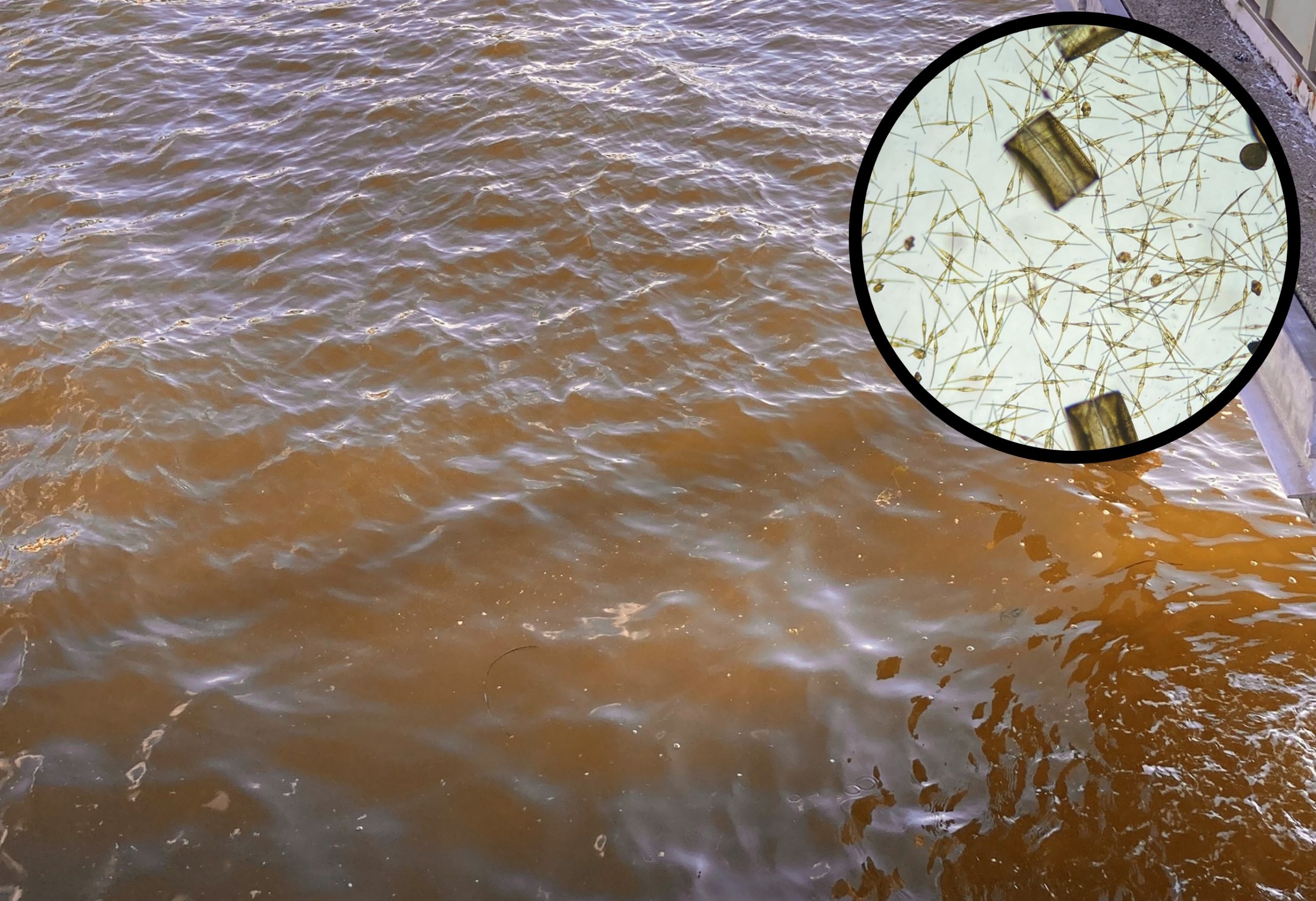
Phytoplankton are microscopic, plant-like, single-celled organisms found throughout freshwater and marine environments. Approximately half of the oxygen we breathe is produced by phytoplankton through photosynthesis. Additionally, as primary producers, phytoplankton are consumed by many organisms, and are the base of marine food webs. During the spring in the Salish Sea, warming temperatures and increasing sunlight stimulate the annual spring plankton bloom, which provides nutrients for the entire ecosystem.
Plankton bloom-and-bust cycles can happen at any time of year if conditions become favorable for a species. Sometimes the trigger is natural: increased rainfall leads to more freshwater input that transports minerals into estuarine systems. Human causes, such as nutrients from sewage or fertilizer runoff entering coastal waters, can also trigger blooms. In either case, certain types of phytoplankton that bloom produce toxins. These toxins can accumulate in shellfish, and because they cannot be removed via freezing or cooking, they lead to human illness when consumed.
What is SoundToxins?
Established in 2006, SoundToxins was created by the Northwest Fisheries Science Center with funding from NOAA as a Puget Sound phytoplankton monitoring program. It follows in the footsteps of the Olympic Region Harmful Algal Blooms Partnership (ORHAB), which is based at the University of Washington’s Olympic Natural Resource Center and works closely with coastal tribal partners.
After ORHAB’s establishment in 1999, several shellfish closures pointed to a need for additional phytoplankton monitoring within Puget Sound. Additionally, Alexandrium catenella, a species that leads to paralytic shellfish poisoning, was spreading throughout inland waters. With support from four partner organizations, Dr. Vera Trainer, a prominent marine scientist who worked with NOAA for three decades, created SoundToxins in 2006. Trainer currently focuses her efforts on leading ORHAB. Now, SoundToxins and ORHAB work to proactively monitor potential shellfish closures by observing phytoplankton communities. The programs can give two to ten days’ warning of potential impacts to shellfish and human health.
In 2025, Trainer was awarded the Yasumoto Lifetime Achievement Award for her dedication to harmful algal bloom (HAB) research. When asked her greatest contribution to HAB research, she stated, “Building community. The Olympic Region HAB (ORHAB) partnership along the Washington outer coast and SoundToxins in Puget Sound are my legacy. These community members will continue to be the “eyes on the coast” long after I’m gone.”
In SoundToxins’ early days, ORHAB members Trainer and Dr. Rita Horner took monthly trips around the Puget Sound to take phytoplankton samples. These samples formed a baseline for phytoplankton communities in the Puget Sound, but due to the limited time at each site, provided only a blurry image of potential toxin threats. In 2011 and 2012, SoundToxins management transitioned to Washington Sea Grant, and improved communications with Washington Department of Health (DOH) were implemented. Longtime SoundToxins manager Teri King worked to build a network of partner and volunteer sampling efforts. SoundToxins sampling methods were formalized and streamlined, and an online data entry system was developed to share information with DOH efficiently.
In 2023, Lepori-Bui took over leadership of the program, and in 2025 Melissa Petrich joined the team. With the collaboration of partner facilities and volunteers, SoundToxins now monitors 35 sites throughout Washington, with more than 80 participants. Annual meetings provide participants with professional development opportunities and refreshers on sampling methods and species identification, as well as time to connect with colleagues throughout the region.
SoundToxins sampling
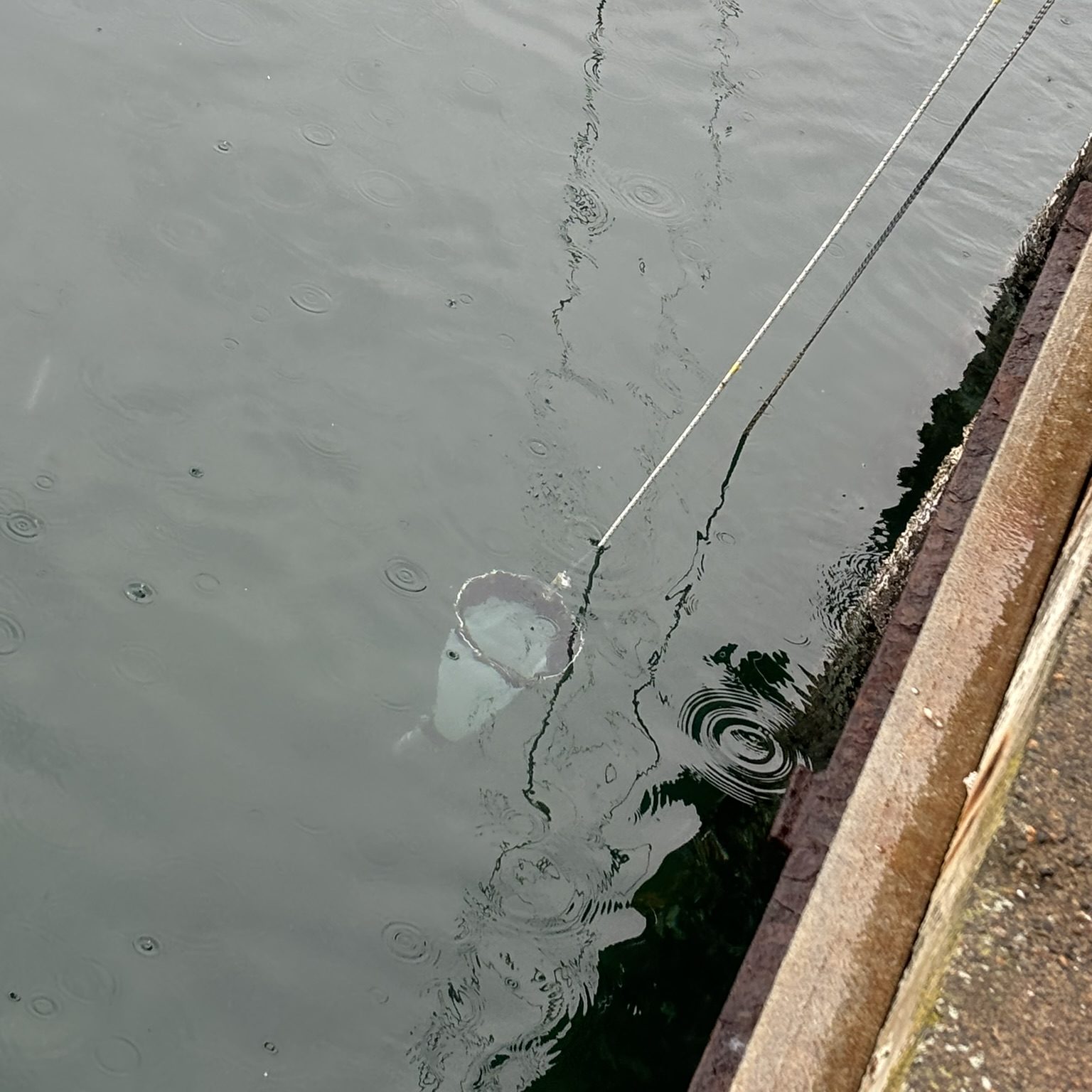
From spring to fall, SoundToxins participants sample sites weekly to provide consistent updates to staff and DOH. During the winter, sampling happens biweekly, as phytoplankton growth typically slows in the colder months. Sites vary between locations, but many feature floating docks, piers, or shorelines. Volunteers use specialized plankton tow nets to condense phytoplankton into a small volume of water. They then analyze collected samples using compound microscopes and SoundToxins ID guides. Volunteers report any alerts for toxic species to SoundToxins staff and partners at Washington Department of Health.
“I am always so blown away and impressed by the volunteers,” says Melissa Petrich, a WSG water quality specialist who works with Lepori-Bui to oversee the program. “Not only what they know, but they are always so willing to learn and make a difference. It is really cool to facilitate all of that good energy.”
I know the feeling. My first experience with phytoplankton monitoring was volunteering with ORHAB based in Grays Harbor County. Between my sophomore and junior years of college, I monitored four marine and estuarine sites, collecting phytoplankton samples to identify and quantify different species. While short in duration, this experience sparked my deep interest in the plankton of the shallow shores of Washington state. In 2023, I was thrilled to return to phytoplankton monitoring via SoundToxins while working as the Lead Aquarist at the MaST Center Aquarium. After connecting with Michelle Lepori-Bui, WSG marine water quality specialist and SoundToxins program lead, Poverty Bay was added as a sampling site, with the MaST Center Aquarium as a SoundToxins partner. In addition to monitoring for harmful and benign phytoplankton, I trained several volunteers who found a passion for exploring the fascinating, miniscule world seen through the eyepieces of a microscope.
Current SoundToxins and MaST volunteer Alex Narayan now passes along her knowledge to new volunteers. “Seeing how the phytoplankton species vary weekly off the dock at the MaST Center over the years is a reminder that the ocean is alive and ever changing,” Narayan says. “I am always excited to share with new volunteers how fascinating plankton are!”
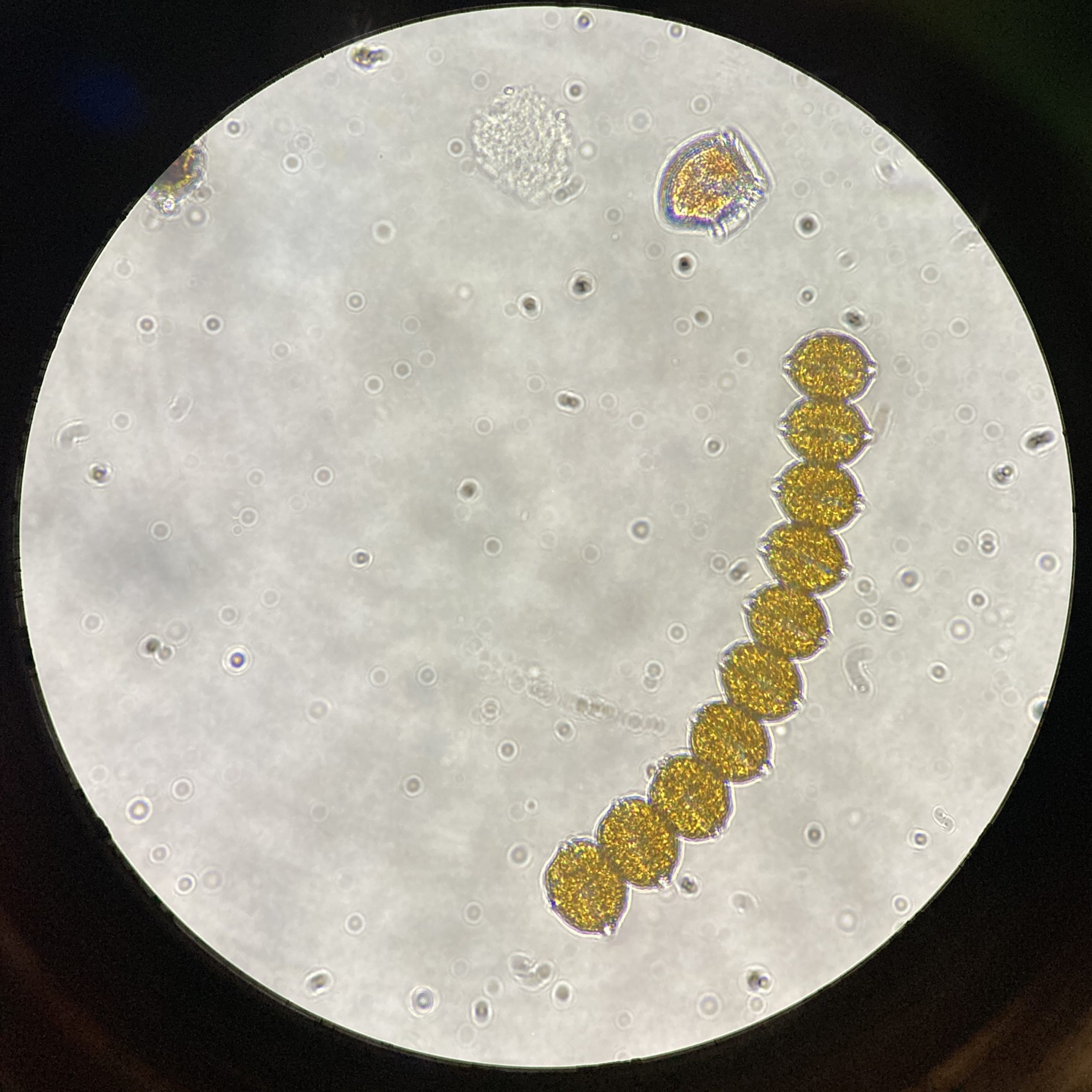
SoundToxins currently monitors nine species of phytoplankton that can lead to human or marine life illness and mortality. Domoic acid produced by Pseudo-nitzschia diatoms can lead to amnesiac shellfish poisoning. Paralytic shellfish poisoning (PSP) and diuretic shellfish poisoning are caused by toxins produced by Alexandrium and Dinophysis dinoflagellates, respectively, and can also lead to life threatening symptoms in humans and marine mammals. In June 2026, an Alexandrium bloom closed shellfishing for several beaches in Hood Canal, Port Ludlow, and Mats Mats bays. Because PSP cannot be detected by sight or smell and cannot be cooked or cleaned out of shellfish, early warnings from plankton monitoring groups are key to keeping communities healthy. Phytoplankton sampling and shellfish testing are being conducted simultaneously, which allows scientists and shellfish growers to determine when beaches are safe to reopen.
SoundToxins recently expanded their watch list to include several phytoplankton species that can cause shellfish and finfish mortalities. While they may not directly affect human health, fisheries closures due to mortality can impact livelihoods and seafood supply lines. SoundToxins also trains phytoplankton samplers to identify nontoxic species in order to record plankton community composition and environmental data at the time of sampling.
SoundToxins’ future
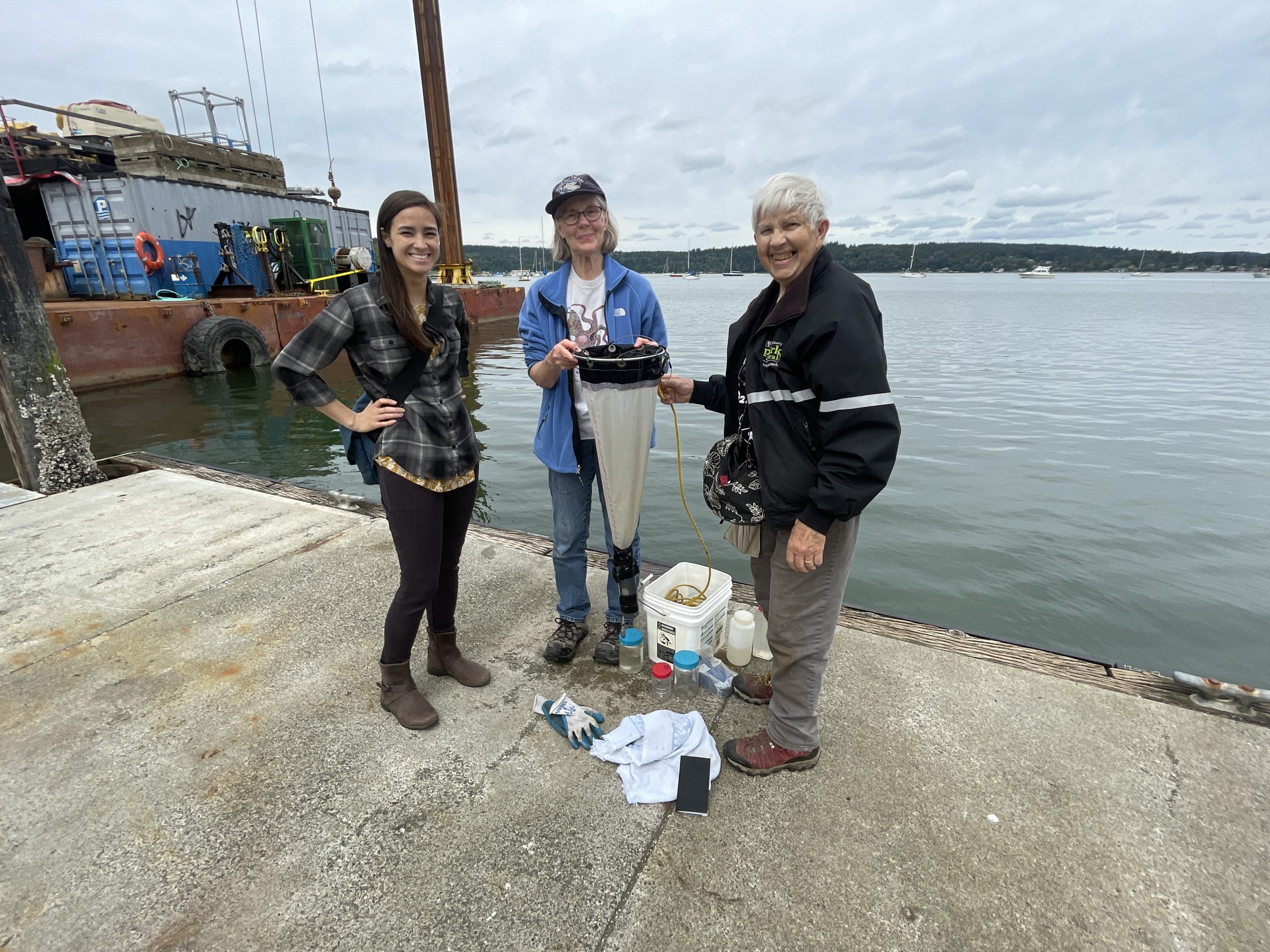
Because SoundToxins is an early warning system for potential public health threats, DOH is frequently able to predict and close a bay to harvesting before toxins bioaccumulate in shellfish. Sometimes, as in the current Hood Canal Alexandrium bloom, early monitoring leads to headline news. Often, it lives quietly in the background, informing the DOH of potential problems before they happen. Just this summer, Washington Department of Fish and Wildlife recognized SoundToxins as its 2026 Organization of the Year. Proactive monitoring and rapid response are what keeps Washingtonians, as well as the customers of Washington’s thriving shellfish industry, safe.
“We want to continue providing this important public service for our shared health indefinitely,” says Lepori-Bui. Though the program has protected human health and the viability of Washington’s shellfish industry for two decades, it currently has no permanent long-term funding, instead persisting on short-term grants and a small amount of federal funding.
“Our strength lies in the incredible volunteer power we have,” Petrich adds. Some intrepid SoundToxins volunteers have recently been using their knowledge of phytoplankton identification to build a photo repository for new and experienced samplers alike.
As a current biology graduate student at Western Washington University, I regularly put my SoundToxins-honed phytoplankton identification skills to use, working on diatom-forage fish interactions in the WWU Olson Lab. The opportunity to work with SoundToxins was invaluable to me and to my continued growth as a scientist, and I am infinitely grateful for the experience. I look forward to seeing this program grow, and cannot wait to work with them again in the future.
SoundToxins is currently looking for monitors in the Sound Puget Sound and South Hood Canal areas. If interested, please contact soundtox@uw.edu.