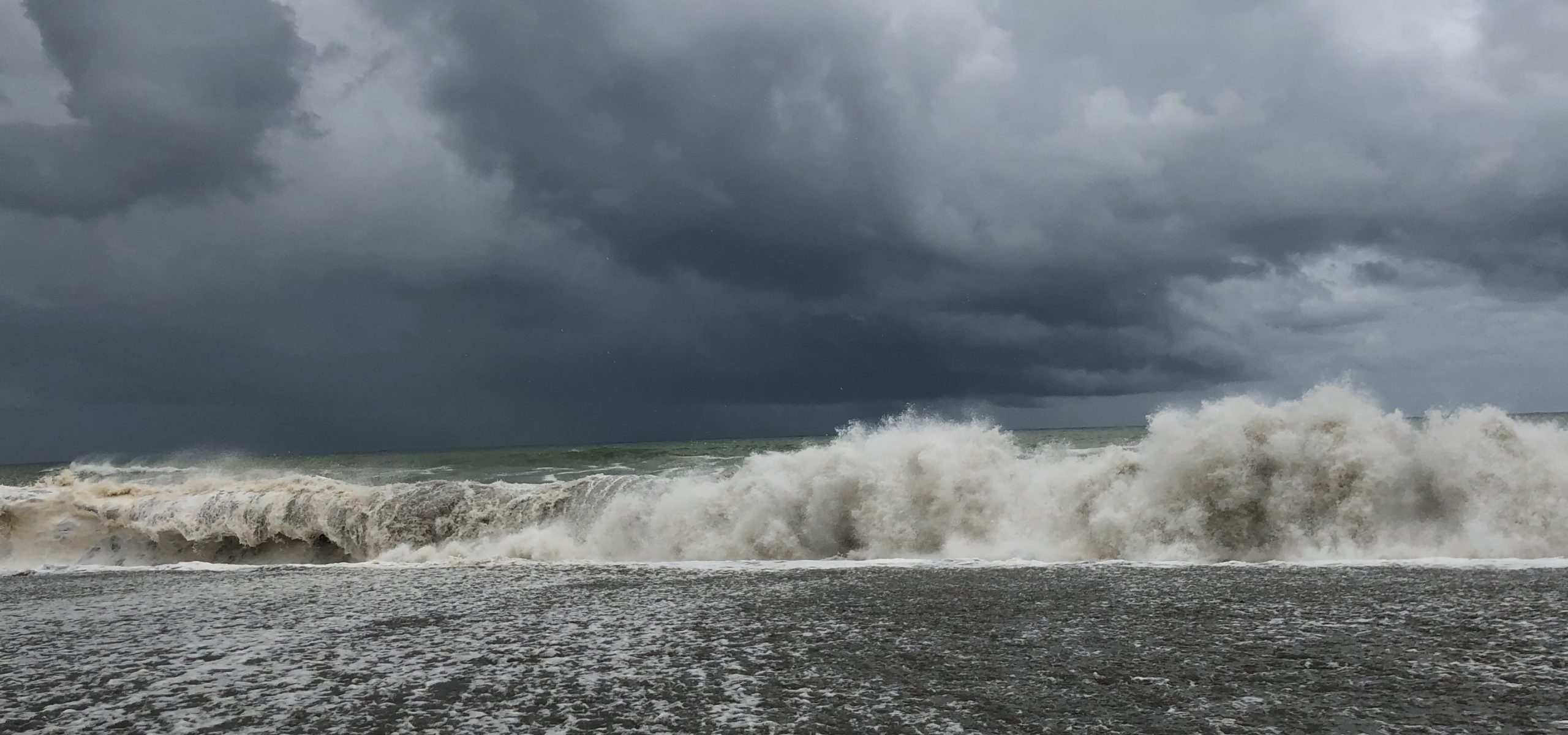
Those living on Washington’s seismically active, dynamic shores face a range of hazards, both natural and amplified by human activities. Some hazards are ongoing and steadily progressing, such as sea level rise and ocean acidification. Some, such as winter storms, seasonal flooding, and bluff erosion, are familiar and may even seem ordinary. And some are rare but potentially catastrophic natural hazards, including major storms, earthquakes, and tsunamis.
Whether flooding, erosion, tsunamis, or sea level rise, WSG’s coastal resilience specialists are at the forefront of efforts to understand, anticipate, mitigate, and adapt to coastal hazards. We work to address the needs of coastal communities in the face of a changing coastal environment.
Sea level rise and storm hazards
Winter storms are a more common coastal hazard in Washington. Winds sometimes reach hurricane-level force and build heavy surf that contributes to flooding and coastal erosion. Eroding beaches and bluffs claim coastal homes and other infrastructure. As warmer temperatures cause land-based ice to melt around the globe and warming seawater to expand, rising sea levels add additional threats to coastal communities. Many of them, including native tribal communities, were built close to shore, at the mouths of rivers, where fish and fresh water were plentiful. Now those estuarine settlements are particularly vulnerable to seasonal flooding made more severe by sea level rise, and tribes are launching huge efforts to relocate their communities to higher ground.
Earthquake and tsunami hazards in Washington
On the seafloor off of Washington’s Pacific coast lies the Cascadia subduction zone, a fault capable of generating large earthquakes and tsunamis. A subduction zone is a setting where one tectonic plate is slowly pushing under another. Pressure builds along the fault until it releases with devastating force in the form of earthquakes, some of which may top nine on the moment magnitude scale, which measures an earthquake’s size. The last magnitude Mw 9 earthquake on the Cascadia subduction zone was in January 1700. Given the past recurrence of great earthquakes, our region should expect another similar earthquake. The estimate for a Mw 8 or greater earthquake is 10-14% chance in the next 50 years.
Subduction zone earthquakes often generate tsunamis by the sudden movement of the sea floor. The tsunami generated by a large quake along this Cascadia subduction zone could reach communities on Washington’s Pacific coast within 20 minutes and those along the Strait of Juan de Fuca in several minutes later. Many Washington jurisdictions are unprepared for such a catastrophe. Further, tsunamis can also reach Washington shores from other faults. Much more could be done to build resilience, from evacuation planning to relocating critical infrastructure out of the inundation zone.
Ocean acidification hazards
Seas are both warming as the planet’s temperature rises and becoming more corrosive due to ocean acidification. The ocean absorbs carbon dioxide (CO₂) from the atmosphere, where it reacts with water (H₂O) to form carbonic acid (H2CO3). This buildup of acidity in the ocean threatens coastal ecosystems and heritage industries such as crab fishing and shellfish farming.
Topic areas
- Sea level rise & erosion
- King tides
- Tsunami preparedness
- Marine carbon dioxide removal
- Ocean acidification
What we do
- Washington Coastal Hazards Resilience Network (CHRN)
- Coastal Storm Modeling System (CoSMoS)
- Washington Interagency Coastal Hazards Organizational Resilience Team (COHORT)
- Lower Willapa Resilience Project
- Lower Columbia (Bay to Bay) Resilience Project
- Cascadia Coastlines and Peoples Hazards Research Hub
- Washington King Tides program
- Parcel scale vulnerability Phase 1
- Tsunami research & outreach
- Ocean acidification on the Olympic Coast
- Ocean acidification community engagement
