
Conservation of phenological variability of an ecosystem foundation species: reassessing the spatio-temporal distribution of herring spawning in Puget Sound
Principal Investigator
- Lorenz Hauser, University of Washington, lhauser@uw.edu
Co-Principal Investigators
- Elizabeth Duffy, Long Live the Kings, ejduffy@gmail.com
- Jed Moore, Nisqually Indian Tribe, moore.jed@nisqually-nsn.gov
- Todd Seamons, Washington Department of Fish & Wildlife (WDFW), todd.seamons@dfw.wa.gov
- Erin Jaco, WDFW, erin.jaco@dfw.wa.gov
- Phillip Dionne, WDFW, phillip.dionne@dfw.wa.gov
- Jayde Essex, Long Live the Kings, jessex@lltk.org
The overall goal of this project is to map and update the spatial and seasonal distribution of genetically different herring populations in Puget Sound. The project’s objectives are to: 1) quantify the spatial distribution of the early spawning population in Puget Sound by screening herring from additional sites; 2) determine the genetic composition of herring over time at specific spawning sites with extended spawn timing; 3) determine the genetic relationships of the newly discovered herring population in the Nisqually Reach area with other herring populations by sequencing their entire genome; 4) estimate the potential impact of commercial fisheries on the smaller herring populations in Puget Sound.
Project background
Pacific herring is a forage fish in Puget Sound that plays a foundational role in moving energy up the food chain to sustain Washington’s commercially and culturally important predators such as salmon. For this reason, the stability of herring abundance has been identified as one of Puget Sound’s Vital Signs. Although the total biomass of herring has rebounded to levels similar to the 1990s, two of three state-recognized genetic populations have nearly disappeared. The decline of population variability is important for two reasons: 1.) genetic variability provides herring with resilience and adaptability against environmental changes; and 2.) the ecological contribution of herring as a forage fish depends in part on their seasonal availability to predators and thus the phenological variability in spawn timing. Historically spawning January through June, herring provided mobile predators with a continuous supply of spawn, larvae and juveniles for almost six months a year; the potential loss of the spring-spawning Cherry Point population could curtail this food supply by at least two months. Conserving the remaining variability is crucial to maintain this important ecosystem function. Fortunately, there may be considerable undetected and unappreciated variability in other herring stocks, of which current knowledge is inadequate.
Results and findings
The team will use an already developed marker panel to assign more than 1300 herring to their population of origin (early, mid and late spawning); samples are mostly already available from the efforts of the Nisqually Tribe and WDFW collaborators. The team also plans to sequence 48 fish from the Oro Bay herring population. A more accurate description of genetic and spawning timing patterns and their change over time may provide a better estimate of genetic and phenological variability of herring in Puget Sound, and may therefore be more useful for determining conservation goals in Puget Sound Partnership’s Vital Signs.
Contact information
Lorenz Hauser
Professor
School of Aquatic and Fishery Sciences, University of Washington
lhauser@uw.edu
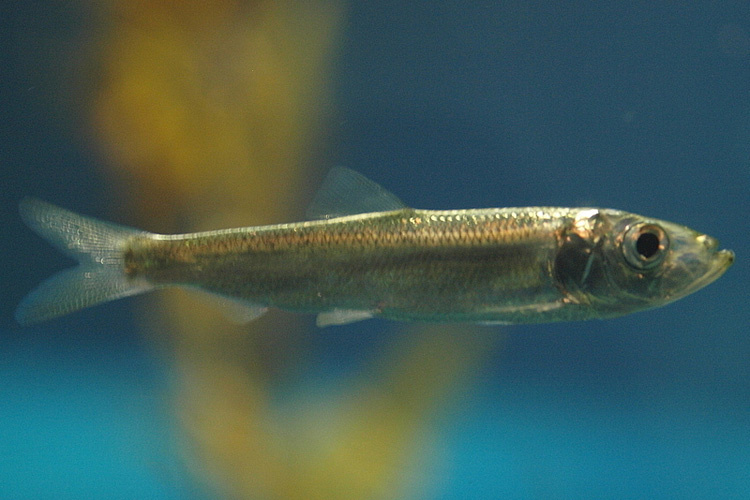
Photo courtesy of NOAA Fisheries